
Iowa homebuyers have more properties to choose from than they did a year ago, but prices have not started falling. In September 2026, the statewide median sale price reached $259,000, up 7.6% from September 2025. At the same time, the number of homes available for sale increased by 15%.
That combination makes the Iowa housing market especially interesting heading into 2027. Buyers are gaining more room to compare homes and negotiate, yet sellers are still receiving higher prices than they did last year.
My forecast for 2027 is that Iowa home prices will continue rising modestly, with some local markets performing better than others. A statewide price collapse looks less likely than slower growth, although high mortgage rates and weaker demand could push prices down in individual cities and counties.
Where the Iowa Housing Market Stands in Late 2026
The September figures from Iowa REALTORS give us a useful starting point for next year.
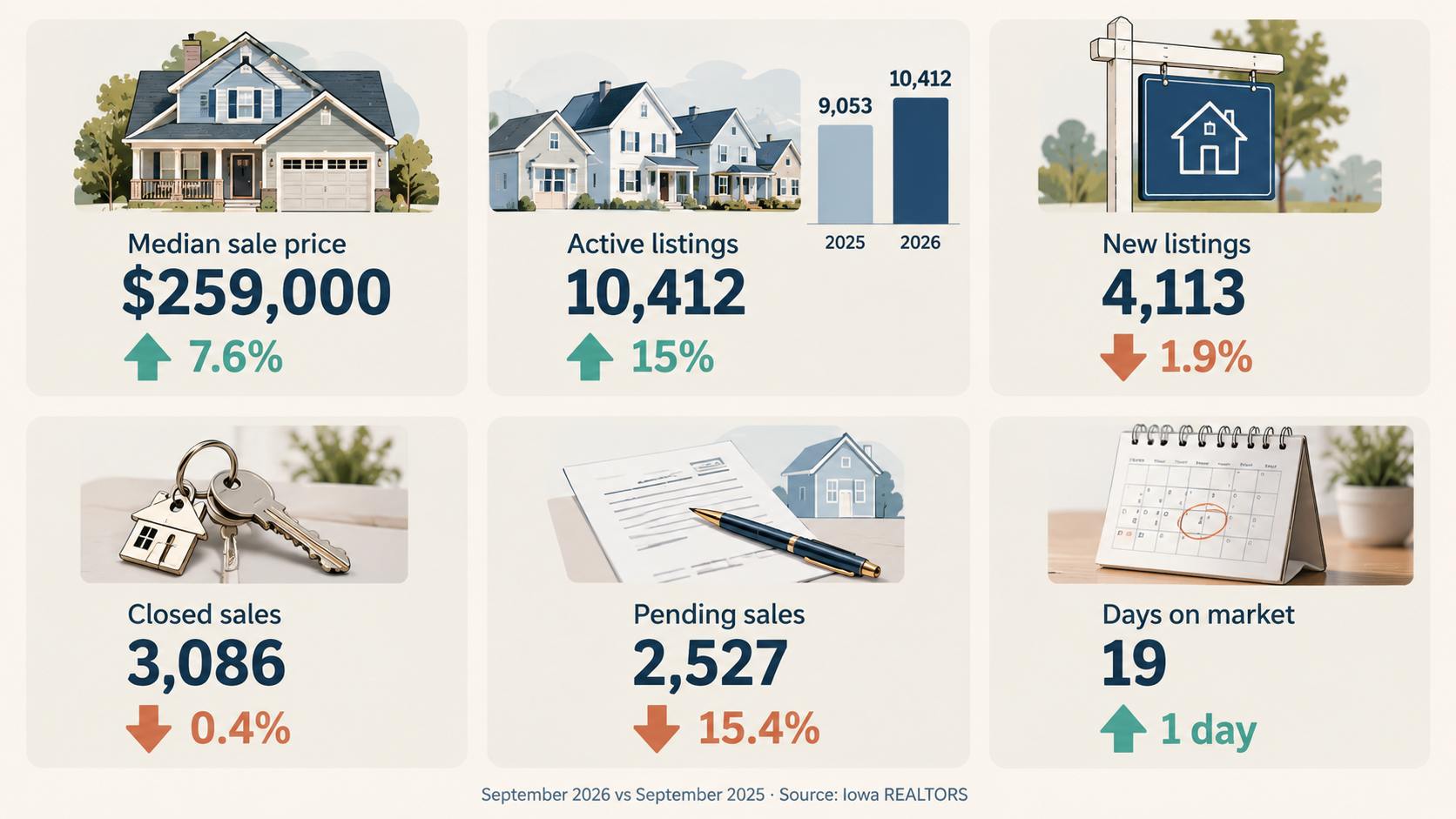
| Housing Market Indicator | September 2026 | Change From September 2025 |
| Median sale price | $259,000 | Up 7.6% |
| Active listings | 10,412 | Up 15% |
| New listings | 4,113 | Down 1.9% |
| Closed sales | 3,086 | Down 0.4% |
| Pending sales | 2,527 | Down 15.4% |
| Median days on market | 19 | Up 1 day |
The increase in available homes is encouraging for buyers. A year earlier, there were 9,053 active listings across the state. By September 2026, that number had climbed to 10,412.
Meanwhile, pending sales fell considerably. Fewer contracts were signed in September than during the same month in 2025, suggesting buyers are becoming more selective.
Prices are still rising, but sellers cannot assume that every property will attract several offers immediately. Homes that need expensive repairs or carry unrealistic asking prices face more competition from other listings.
Will Iowa Home Prices Increase in 2027?
I expect a smaller annual increase than the 7.6% recorded in September 2026. A reasonable planning scenario is statewide price growth of 1% to 4% during 2027, provided mortgage rates remain elevated but employment and household demand avoid a major downturn.
The 1% to 4% range is my forecast, not a published projection from Iowa REALTORS or a government agency. It represents a scenario based on rising inventory, slower pending sales and continued price appreciation through 2026.
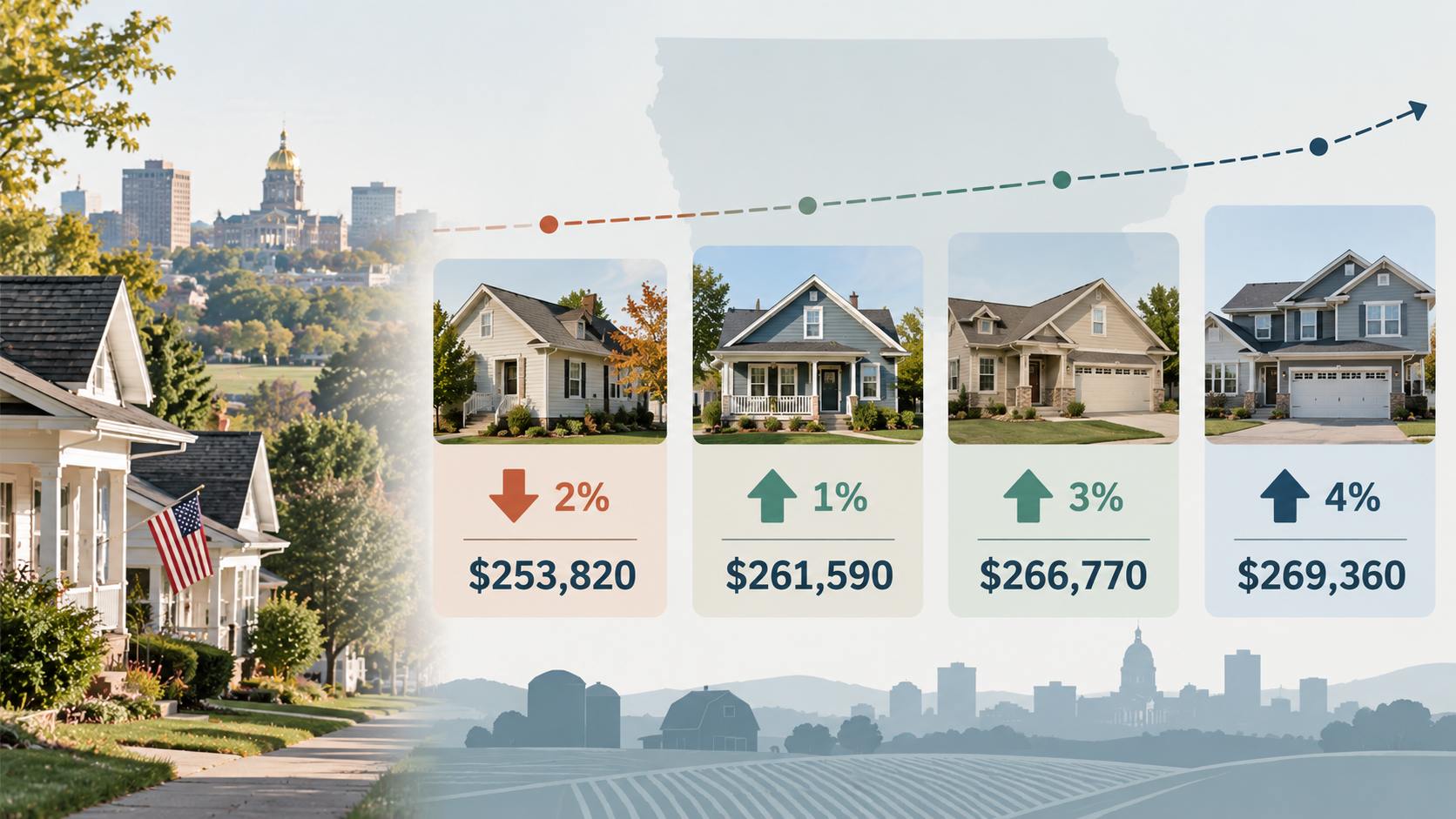
Using the September median sale price of $259,000 as a starting point, the potential outcomes look like this.
| 2027 Scenario | Price Change | Illustrative Median Price |
| Weaker market | Down 2% | $253,820 |
| Slow growth | Up 1% | $261,590 |
| Moderate growth | Up 3% | $266,770 |
| Stronger demand | Up 4% | $269,360 |
These are calculations, not predictions of exact future sale prices. They apply hypothetical changes to one monthly median and do not adjust for seasonal changes or the mix of homes sold.
The biggest reason for expecting slower growth is the growing number of properties on the market. More available homes mean buyers have alternatives, reducing the pressure to make aggressive offers.
However, inventory growth does not automatically lead to falling prices. Iowa would need a larger imbalance between supply and demand for sustained statewide price declines.
Mortgage Rates Could Have the Biggest Influence on Buyers
For many Iowa households, the interest rate is now as important as the asking price.
On October 22, 2026, Freddie Mac reported an average 30-year fixed mortgage rate of 7.32%, compared with 6.19% one year earlier.
Consider a buyer purchasing a $260,000 home with a 20% down payment. The mortgage would be $208,000.
| Mortgage Rate | Monthly Principal and Interest |
| 6.0% | $1,247 |
| 7.0% | $1,384 |
| 7.32% | $1,428 |
| 8.0% | $1,526 |
Illustrative calculations for a $208,000 mortgage over 30 years. Payments exclude property taxes, homeowners insurance, maintenance and any homeowners association fees.
At 7.32%, the monthly principal and interest payment is $181 higher than at 6%. Over a year, the difference reaches $2,172.
For a household already stretching its budget, that extra payment can determine how much it can offer for a house.
If mortgage rates decline during 2027, more buyers may return to the market. However, additional demand could also support higher home prices, particularly in popular suburbs with limited available housing.
Des Moines, Iowa City and Cedar Rapids May Follow Separate Paths
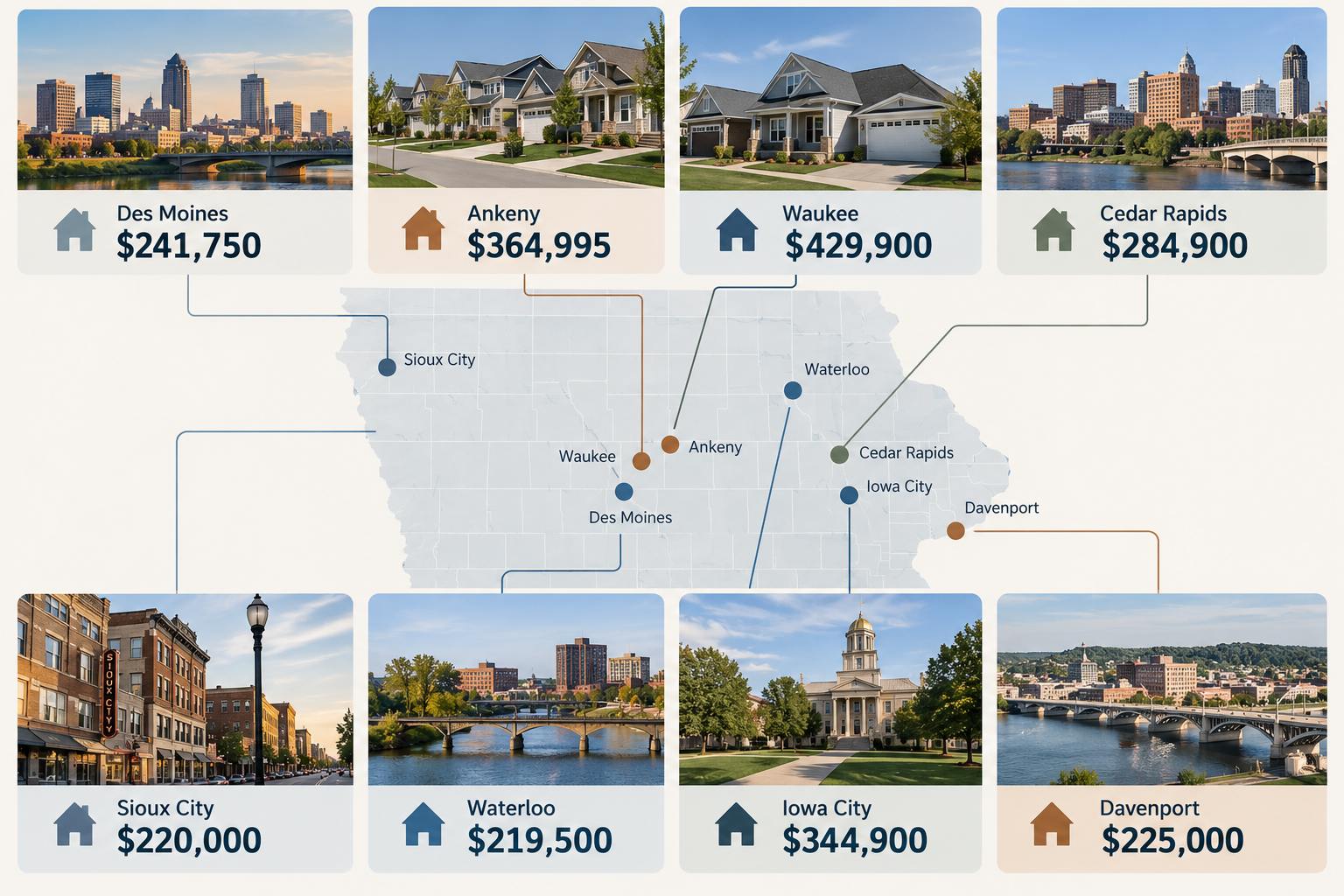
Statewide statistics hide substantial price gaps between Iowa communities. A buyer searching in Waukee faces a very different market from someone looking in Waterloo or Sioux City.
The September 2026 figures published by Realtor.com show just how wide those gaps are.
| City | Median Listing Price |
| Des Moines | $241,750 |
| Ankeny | $364,995 |
| Waukee | $429,900 |
| Cedar Rapids | $284,900 |
| Iowa City | $344,900 |
| Davenport | $225,000 |
| Waterloo | $219,500 |
| Sioux City | $220,000 |
These are advertised listing prices, not completed sale prices. They should not be compared directly with the statewide median sale price.
Des Moines and Its Suburbs
The Des Moines area should continue attracting buyers who want access to employment, schools and newer housing. However, prices vary considerably between established city neighborhoods and expanding suburbs.
Waukee and Ankeny command higher asking prices than Des Moines itself. Buyers who want a newer home may need to accept a larger mortgage or consider older properties in nearby communities.
Iowa City
Iowa City has a substantial employment base connected to the University of Iowa and its health care facilities. Housing demand from students, employees and local families places pressure on available properties.
Its relatively high listing prices suggest that affordability will remain a challenge in 2027, especially for first-time buyers.
Cedar Rapids
Cedar Rapids offers a middle ground between expensive university-area housing and smaller rural markets.
Its housing costs remain lower than those of several Des Moines suburbs, but buyers should pay attention to property condition, insurance expenses and neighborhood-level price trends.
Can First-Time Buyers Still Afford a House in Iowa?

Iowa remains less expensive than many parts of the United States, but a lower purchase price does not necessarily produce an affordable monthly payment.
Mortgage interest, property taxes, insurance and maintenance all affect the cost of ownership. Older homes can also require expensive work soon after purchase.
The pressure becomes clearer when comparing housing expenses with the cost of living in Iowa. Households must still pay for transportation, groceries, utilities and child care after making the mortgage payment.
For buyers with limited savings, a smaller home in sound condition may be a safer choice than a larger property requiring immediate repairs.
Location also provides opportunities to save. Our comparison of the cheapest counties to buy a house in Iowa identified several rural areas where typical home values remained below $150,000 during early 2026.
Lower prices can come with longer commutes, fewer nearby jobs and older housing. Buyers should include those costs when comparing communities.
Affordable Home Improvements That Could Help Sellers
As more homes enter the market, sellers may need to spend more time preparing their properties for viewings.
Small repairs and visible improvements can make a house more appealing without creating a large renovation bill.
Start with damaged paint, broken fixtures, leaking faucets and worn flooring. Clean the exterior, repair loose steps and trim shrubs that hide the entrance.
Outdoor areas also deserve attention. A damaged patio or aging deck may discourage buyers who see an expensive replacement project ahead.
Where a deck genuinely needs rebuilding, materials such as timber, composite boards or aluminium decking offer different maintenance requirements and installation costs.
The last option is generally a more specialised investment rather than a budget repair, so sellers should compare its total cost with the likely benefit in their local market.
Should Iowa Homeowners Sell Now or Wait Until 2027?
View this post on Instagram
Waiting for higher prices is tempting, especially after another year of appreciation. However, a future increase is not guaranteed.
- Local competition: More similar homes for sale can make it harder to command a premium price.
- Property condition: Houses needing major repairs may face larger discounts when buyers have more choices.
- Moving costs: Selling at a higher price may not help much if the replacement home and new mortgage are also more expensive.
Someone with a low fixed mortgage rate should be especially careful before selling and financing another home. A small gain in sale price can be offset by years of higher monthly payments.
For homeowners who already need to relocate, trying to identify the perfect month to sell carries its own risks. A realistic listing price and a well-maintained property remain more reliable than betting on a particular forecast.
What Could Cause Iowa Home Prices to Fall in 2027?
Several developments could weaken the market more than expected.
A sharp increase in unemployment would reduce the number of households able to qualify for mortgages. Persistently high interest rates could keep buyers out of the market, especially younger families purchasing their first home.
Further inventory growth could also put pressure on prices if available properties begin outnumbering serious buyers in more communities.
Insurance and property tax costs deserve attention. A house with an affordable mortgage can become difficult to maintain if its other ownership expenses rise sharply.
However, none of these risks proves that Iowa is heading toward a housing crash. The September figures still showed rising median prices and completed sales close to the previous year’s level.
Slower Growth Looks More Likely Than a Crash
Iowa is entering 2027 with two opposing forces. Home prices have continued rising, but the growing supply of available properties and weaker pending sales suggest buyers are becoming more cautious.
My forecast is annual statewide price growth of 1% to 4%, provided the economy remains stable. Some communities may record little growth, and individual properties could sell below their previous valuations.
For buyers, the increasing number of listings is an opportunity to compare houses carefully and negotiate without assuming every property will sell immediately.
For sellers, realistic prices and necessary repairs will become increasingly important.
Look at this video on 2026 housing market reports if you’re interested in more info: