
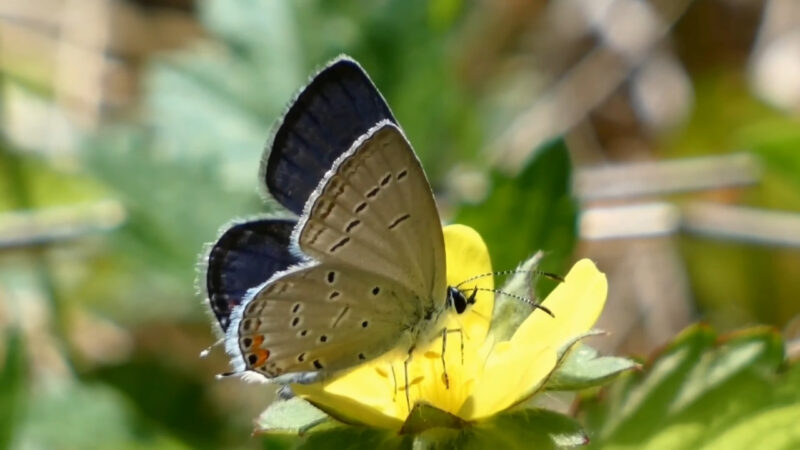
Late summer is one of the best times to notice butterflies in Iowa. Prairies are still flowering, gardens are full of nectar plants, and several species remain active well into September.
At the same time, monarchs are beginning the most dramatic part of their annual cycle, leaving Iowa on a journey that eventually ends in central Mexico.
Iowa has roughly 110 butterfly species that reproduce in the state, according to the Iowa Department of Natural Resources. You do not need to visit a remote preserve to find them.
Some of the species below turn up in suburban gardens, road edges, city parks, woodland clearings, and ordinary patches of flowers.
1. Monarch
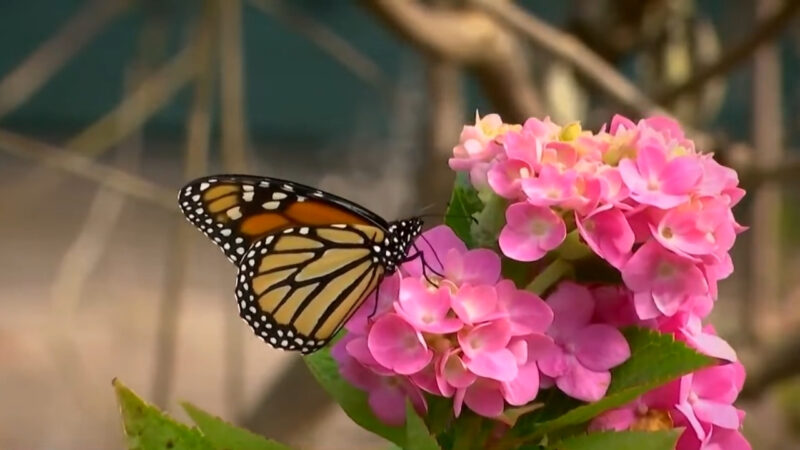
The monarch is still the Iowa butterfly almost everyone recognizes. Its large orange wings are divided by black veins and surrounded by a black border dotted with white spots.
Late August and September are particularly interesting because Iowa’s migratory generation begins heading south. The DNR says monarchs normally arrive in Iowa in late May or early June, produce several generations through the summer, and begin their southward migration in late August and September.
The Butterflies of Iowa database describes monarchs as abundant across the state in open habitats where milkweed is available. Adult numbers generally build through summer before migration peaks around mid-September.
Look for them around milkweed, blazing star, asters, goldenrod, and other nectar-rich flowers. A sunny prairie or roadside full of late-season flowers can produce several sightings in a short walk.
2. Eastern Tiger Swallowtail
Few Iowa butterflies are harder to miss than an eastern tiger swallowtail. Adults are large, with yellow wings, bold black stripes and the pointed tails that give swallowtails their name.
Females are slightly trickier to identify because some have a much darker form where black coloring covers most of the yellow.
Eastern tiger swallowtails are breeding residents and occur across Iowa. According to Insects of Iowa, they are particularly common around forest edges with nearby flowers. Their caterpillars feed on trees including wild cherry and ash.
Several confirmed sightings were logged across Iowa in August 2026, including records from Marion and Fayette County. Woodland trails are a good place to watch for them, especially where the trees open into sunny patches.
Places with a mix of woods, prairie, and open water work particularly well for butterfly watching.
Our guide to Viking Lake State Park covers one Iowa destination where trails and natural areas provide plenty of opportunities to watch wildlife away from busy urban areas.
3. Black Swallowtail
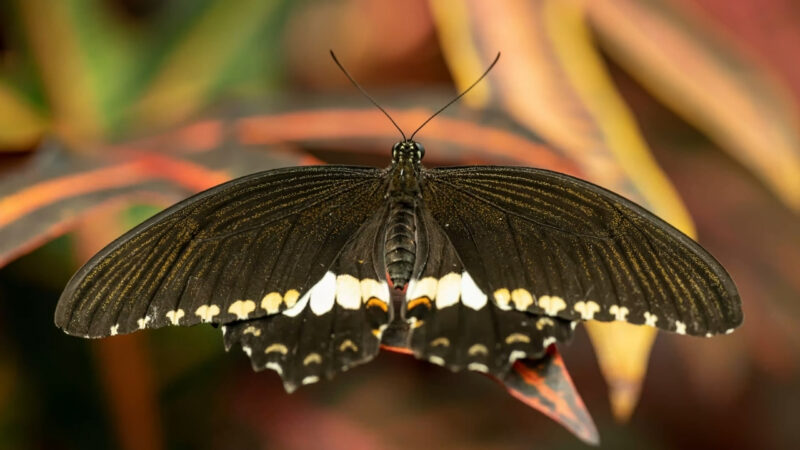
Black swallowtails are another large species you can encounter across Iowa, although their dark coloring makes them very different from the yellow eastern tiger swallowtail.
Adults are mostly black with rows of pale yellow spots. Blue markings appear on the hindwings, particularly on females, along with a small orange-red spot near the tail.
Gardens are excellent places to find them because the caterpillars feed on plants in the carrot family. Parsley, dill, and fennel planted for the kitchen sometimes become caterpillar habitat without the gardener planning it.
Black swallowtails are among the most common butterflies in Iowa, alongside monarchs, red admirals and several smaller species.
4. Red Admiral
View this post on Instagram
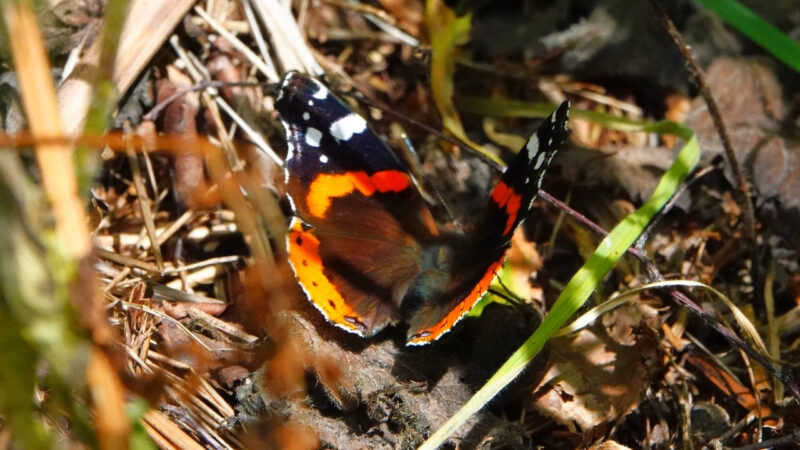
A red admiral is much easier to identify once you know what to look for. Its wings are dark brown to nearly black, crossed by bright reddish-orange bands, with white markings close to the tips of the forewings.
Red admirals are energetic butterflies that regularly land on tree trunks, paths, fences, and even people. They feed on flower nectar but also visit rotting fruit and tree sap.
You can encounter them in gardens, wooded parks, and along trails. Anyone spending time hiking around Iowa already has a good chance of passing through suitable habitat.
5. Painted Lady
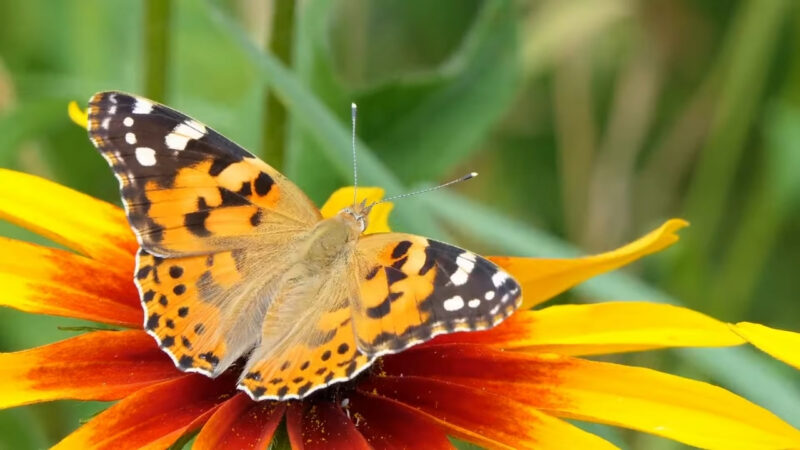
Painted ladies resemble smaller, slightly more complicated monarchs at first glance. Their wings contain orange, brown, black, and white markings rather than the monarch’s clean black-veined pattern.
One useful clue appears when the butterfly closes its wings. The underside of the hindwing contains several small eyespots.
Painted ladies are powerful migrants with an enormous geographic range. Their numbers in Iowa vary from year to year because populations move over long distances in response to weather, food, and breeding conditions.
When they are abundant, they can appear almost anywhere with flowers, including yards, parks, and agricultural landscapes.
6. Pearl Crescent
@thebutterflyceo #pearlcrescent #butterfly #aster #hostplants #butterflies ♬ original sound – Mumford & Sons
Pearl crescents are much smaller than monarchs or swallowtails, so people regularly walk past them without noticing.
The wings are orange with an intricate network of dark markings. Adults generally stay close to the ground and visit small flowers in sunny areas.
The species is among the most frequently reported Iowa butterflies in the Butterflies and Moths of North America database. Roadsides, old fields, trails, and open lawns with flowering plants are good places to find one.
Pearl crescents also illustrate why butterfly watching becomes more interesting after the first few large species. Once your eyes adjust to the smaller butterflies sitting close to the ground, a patch of prairie that looked empty suddenly becomes busy.
7. Orange Sulphur
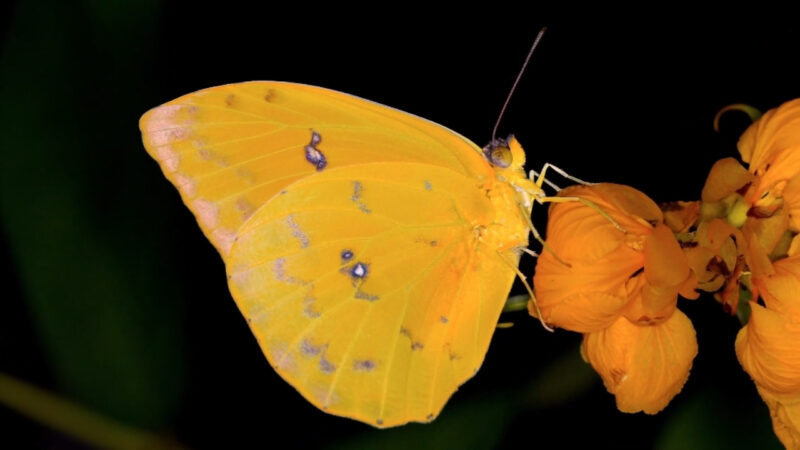
Small yellow and orange butterflies fluttering low over fields are frequently orange sulphurs.
They are closely associated with open country and are easy to find around agricultural areas. Alfalfa and other legumes serve as important host plants for the caterpillars, which gives the species plenty of suitable habitat across Iowa.
The upper wings range from yellow to rich orange with dark margins. When resting with the wings folded, the butterfly appears much paler and can be confused with the closely related clouded sulphur.
Both species rank among Iowa’s most commonly reported butterflies.
8. Cabbage White
Cabbage White Butterfly in flight. 😀
Taken this weekend from my bathroom window. 😁🦋 pic.twitter.com/0WPO9j3Nox— Carl Bovis (@CarlBovisNature) August 24, 2026
The cabbage white will never win the award for Iowa’s most colorful butterfly, but it may be one of the easiest to find.
Adults are small and pale white or cream, with dark tips on the forewings and one or two black spots depending on sex. They frequently fly through yards, vegetable gardens, parks, and vacant lots.
Cabbage whites are not native to North America. The species arrived from Europe during the 1800s and spread rapidly across the continent.
Its caterpillars feed on cabbage, broccoli, kale, and related plants, which explains why vegetable gardeners encounter them so regularly.
9. Great Spangled Fritillary
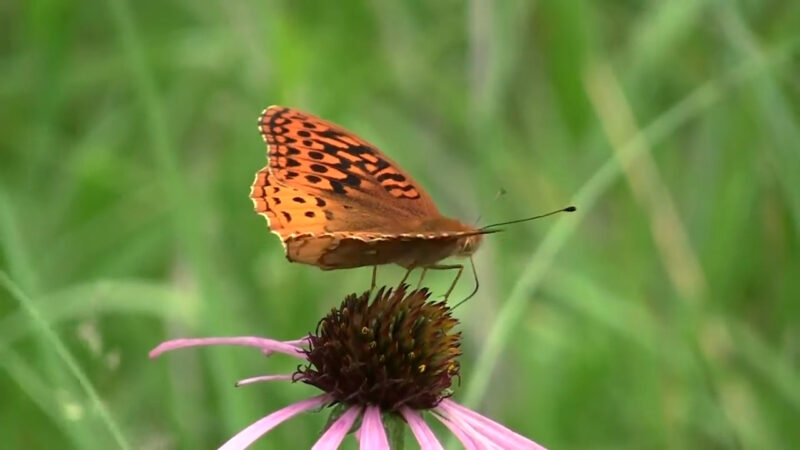
Great spangled fritillaries bring another large orange butterfly into the mix, but they look quite different from monarchs.
The upper wings are orange with numerous dark spots and lines. The underside of the hindwing carries large silver-colored spots, which provide one of the easiest ways to confirm the identification.
Adults favor open woods, prairie edges, and flower-rich fields. Their caterpillars depend on violets, so areas containing native violets provide important breeding habitat.
10. Eastern Tailed-Blue
One of the smallest butterflies on the list is also widely reported around Iowa.
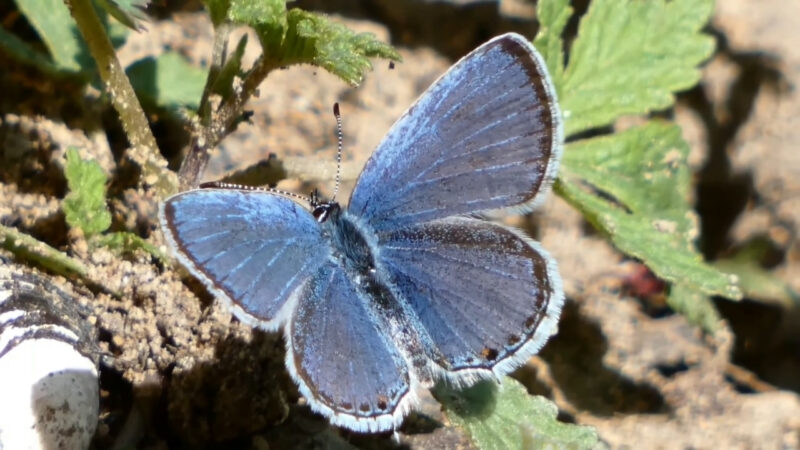
Eastern tailed-blues have a wingspan of roughly an inch. Males show bright blue on the upper surface of the wings, while females are generally darker. Both have tiny tails on the hindwings and small orange markings close to them.
They stay low to the ground and are associated with clover, alfalfa, and other legumes. Watch the edges of paths and short flowering vegetation rather than searching high in trees.
Late August Is a Particularly Good Time for Monarchs
The timing of this article falls right as Iowa enters one of the most interesting butterfly periods of the year.
The Iowa Monarch Conservation Consortium reported in August that Iowans are being asked to help document the fall migration. The Iowa State University-based consortium works with researchers, agencies, farmers, and residents to improve monarch habitat across the state.
Iowa matters because it sits in the center of the Upper Midwest breeding region. The Iowa DNR estimates that about 38% of monarchs reaching Mexico originate in the Upper Midwest, placing Iowa directly within an important part of the migration corridor.
A monarch seen in an Iowa garden during September may therefore be beginning a trip of thousands of miles.
Where to Look for Butterflies in Iowa
Prairies are an obvious choice, but butterflies use a much wider range of places. Sunny forest edges, restored grasslands, roadsides, gardens, state parks, and patches of native plants can all produce sightings.
The easiest strategy is to find flowers and stay there for a few minutes. Butterflies move between nectar sources, and many return repeatedly to productive patches.
Late-summer plants are particularly valuable. The Iowa DNR recommends prairie blazing star, New England aster, and goldenrods for late-season pollinators. Summer flowers such as butterfly milkweed, pale purple coneflower, and wild bergamot also provide food earlier in the season.
The DNR’s native planting guidance recommends combining plants that flower at different points of the year so nectar remains available through the growing season.
One Thing Not to Forget About Iowa Butterflies
Seeing plenty of monarchs on one September afternoon does not mean every Iowa butterfly population is doing well.
Of the roughly 110 species that reproduce in Iowa, the DNR identifies 51 as Species of Greatest Conservation Need. Two Iowa butterflies, the Poweshiek skipperling and Dakota skipper, are federally protected under the Endangered Species Act.
The butterflies most people encounter in yards and parks represent only part of what lives here. Monarchs, swallowtails, sulphurs and red admirals remain relatively easy to spot, but some prairie specialists now survive in much smaller and more fragmented habitats.
For Your Next Walk
If you want to start identifying Iowa butterflies, begin with the obvious ones. Learn the orange-and-black monarch, the huge yellow eastern tiger swallowtail, the dark red admiral and the tiny white cabbage white.
After a few outings, the smaller crescents, blues, sulphurs, and fritillaries become much easier to separate.
Late August and September give you one more advantage. Monarch migration is beginning, late-summer flowers are still producing nectar, and plenty of other Iowa butterflies remain active alongside them.