
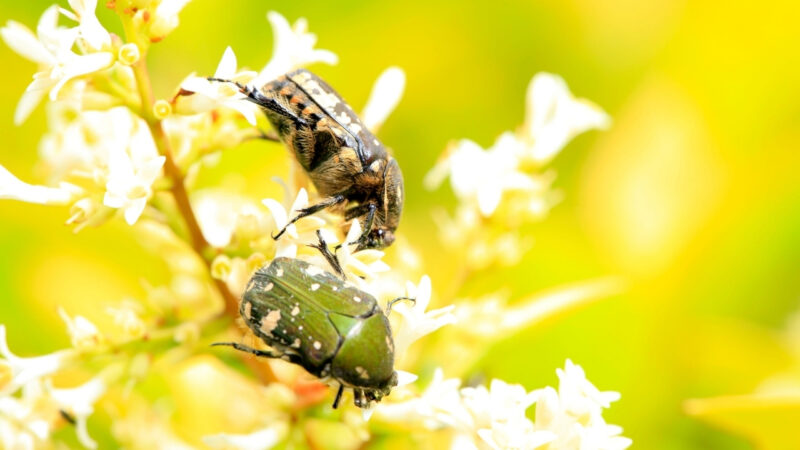
An Iowa backyard can look quiet from the kitchen window and turn into a completely different place once you start paying attention. Ants are working along the patio, beetles are chewing leaves, cicadas are calling from the trees, and tiny predators are hunting pests among the flowers.
Some of these bugs are harmless. A few are genuinely useful. Others can damage plants, bite, sting, or become a nuisance when they move indoors.
The useful part is knowing which one you are looking at before reaching for a spray bottle.
Iowa has thousands of insect species, so no backyard list can cover everything. The bugs below are the ones residents are especially likely to notice around lawns, gardens, trees, porches, and houses.
1. Boxelder Bugs
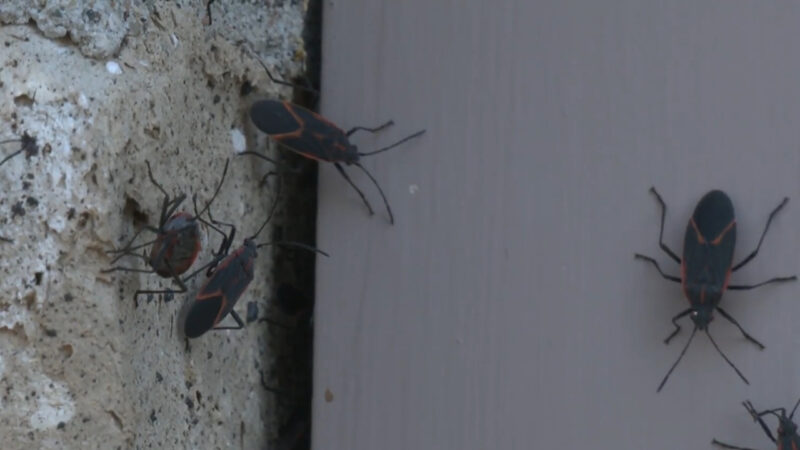
Boxelder bugs are one of the most familiar fall nuisances in Iowa. Adults are mostly black with thin reddish-orange markings along the wings and body.
During summer, they live outdoors and feed on boxelder, maple, ash, and several other plants. The trouble starts as temperatures fall. Large groups gather on warm, sunny sides of houses and search for cracks where they can spend the winter.
According to Iowa State University Extension, boxelder bugs do not reproduce or feed inside homes. They are primarily a nuisance rather than a structural pest.
Sealing gaps around doors, windows, siding, and foundations before fall is much more useful than trying to kill large numbers after they have already entered the walls.
2. Japanese Beetles
Japanese beetles are much more serious for gardens.
Adults are easy to recognize once you have seen one. They have metallic green heads, copper-colored wing covers, and small white tufts along the sides of the abdomen.
The species was first confirmed in Iowa in 1994 and has since spread through most of the state. Iowa State University describes it as one of the most destructive landscape and garden pests because adults feed on a huge range of plants and the larvae live underground as grubs.
Roses, grapes, raspberries, crabapples, birches and lindens are among the plants that can take heavy damage. Feeding leaves behind a skeletonized leaf where much of the tissue between the veins has disappeared.
They were especially noticeable early in 2026. Iowa State University reported in June that adult development was running about two weeks ahead of schedule after a warm May.
If only a few are attacking a prized plant, early-morning hand removal works surprisingly well. Extension specialists recommend knocking sluggish beetles into soapy water. Commercial Japanese beetle traps can actually attract additional beetles into the area, so placing one beside the roses is not necessarily helping.
3. Fireflies
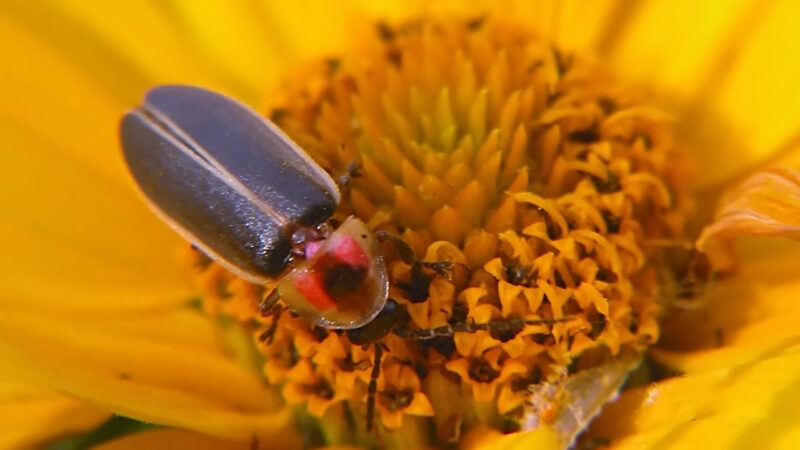
Fireflies are beetles, even though almost everyone calls them bugs or lightningbugs.
They become one of the easiest insects to notice on warm Iowa evenings when adults begin flashing over lawns, gardens, and fields. The light is part of their mating communication, and different species produce different flash patterns.
Fireflies spend much more of their lives as larvae than as the glowing adults people recognize. Larvae live near the ground and feed on small animals such as snails, slugs, and other soft-bodied invertebrates.
A perfectly manicured yard is not always the best firefly habitat. Leaf litter, taller vegetation and areas that are not constantly disturbed provide places for larvae to survive.
4. Cicadas
View this post on Instagram
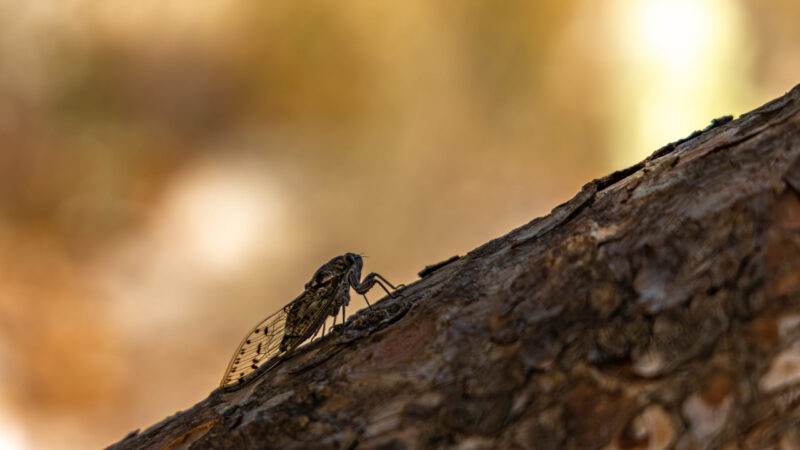
Cicadas provide the soundtrack of an Iowa summer long before most people actually see one.
The annual cicadas heard every year spend their immature stage underground feeding on fluids from tree roots. Mature nymphs eventually emerge, climb trees or other vertical surfaces, and shed their skins.
Those empty brown shells attached to tree trunks, fence posts, and patio furniture are one of the easiest signs that cicadas are active.
Adult males produce the loud calls heard during hot summer days. The sound can be intense, but annual cicadas are not attacking trees or people.
Young trees can suffer damage when female cicadas cut small slits into twigs to lay eggs, although established trees generally tolerate the activity well.
5. Mosquitoes
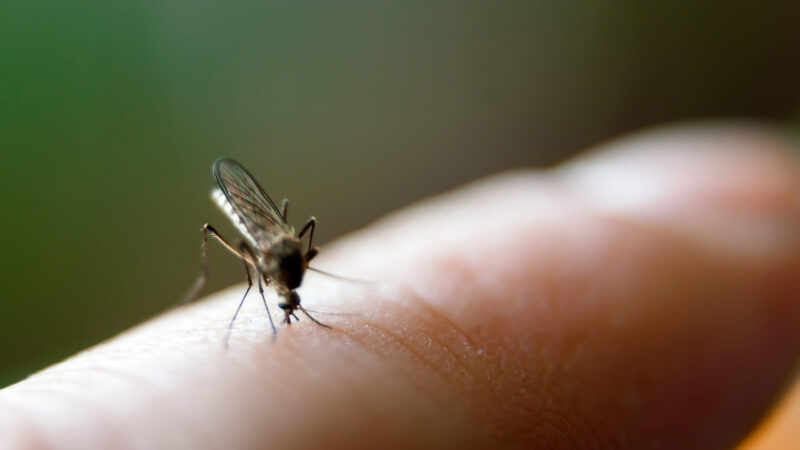
Mosquitoes are the backyard insect that deserves more caution.
Iowa has multiple mosquito species, and populations build around standing water. A surprisingly small amount is enough. Gutters, buckets, flowerpot saucers, children’s toys, birdbaths, and discarded containers can all produce breeding habitat.
Reducing standing water is one of the simplest ways to lower mosquito numbers around a house.
Mosquitoes also matter because some species can transmit diseases, including West Nile virus. Our guide to dangerous animals in Iowa covers mosquitoes alongside several other animals residents need to treat more seriously.
A backyard with mosquitoes does not automatically indicate a disease risk, but repeated bites are a good reason to check the property for water that has been sitting untouched.
6. Paper Wasps
@djwilliams767 Only in Iowa I swear #fyp #foryoupage #insects #wasp #murderhornet ♬ original sound – David Attenborough
Paper wasps are common around decks, eaves, sheds, and other sheltered parts of Iowa homes.
Their nests are made from chewed plant fibers and have an exposed honeycomb appearance. A small nest under an unused shed roof may never bother anyone. A nest beside a frequently opened door is a different situation.
Paper wasps hunt caterpillars and other insects, so they provide useful pest control away from high-traffic areas.
Iowa has several species, including dark paper wasps and European paper wasps. We have a separate guide to wasp species found in Iowa with identification details for paper wasps, yellowjackets, bald-faced hornets, and other local species.
The main rule around an active nest is distance. Wasps defending a nest are much more likely to sting than individuals simply searching flowers for food.
7. Yellowjackets
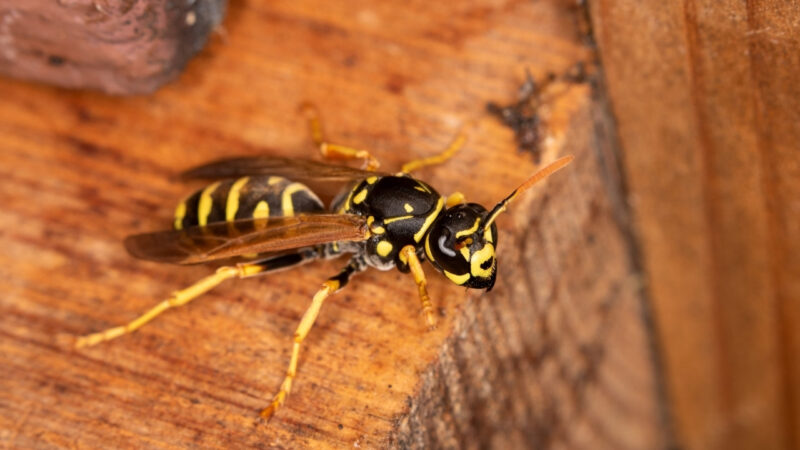
Yellowjackets become especially noticeable later in summer when workers begin turning up around trash cans, outdoor meals, and sugary drinks.
They are more compact than paper wasps and build enclosed nests. Some species nest underground, which creates problems when a mower or person passes directly over the entrance.
Unlike honey bees, yellowjackets can sting repeatedly.
A few workers visiting food are irritating but manageable. Regular traffic disappearing into a hole in the lawn, retaining wall, or building is a sign that a nest is nearby.
8. Bumble Bees
Volunteers across Iowa conducted nearly 500 Bumble Bee Atlas surveys in 2025, which was more than three times the number of surveys conducted the year prior. https://t.co/xreutjcz3r
— Successful Farming (@SuccessfulFarm) July 9, 2026
Bumble bees are among the backyard insects worth leaving alone whenever possible.
Iowa probably has hundreds of native bee species in total. The Iowa Department of Natural Resources estimates that the state likely supports 400 to 500 native bee species.
Bumble bees are large and fuzzy, and they move heavily between flowers, collecting pollen and nectar. Tomatoes, peppers, native wildflowers, and many other plants benefit from their pollination.
The endangered rusty patched bumble bee has also been recorded in Iowa.
A bee moving between flowers has little interest in people. Problems are more likely when someone disturbs a nest, which can be underground or hidden in an old rodent burrow.
9. Honey Bees
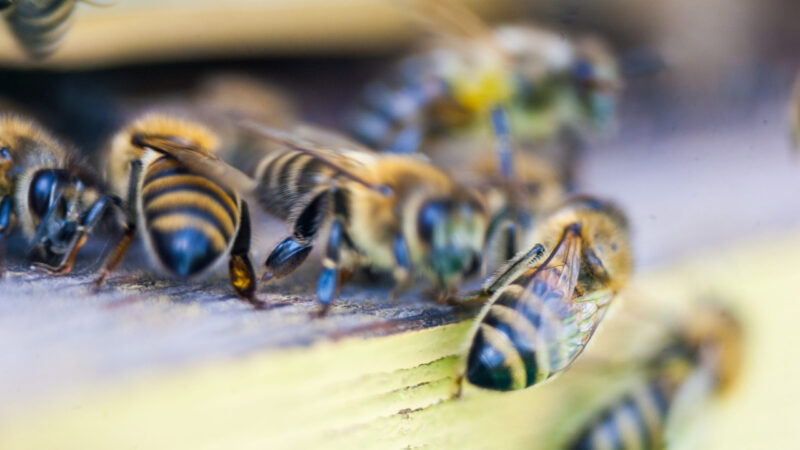
Honey bees are familiar garden visitors, although they are not native to North America.
They were introduced because of their usefulness for honey production and crop pollination. Workers are smaller and slimmer than most bumble bees, with golden-brown coloring rather than the heavier fuzzy appearance of a bumble bee.
A handful feeding on clover or garden flowers is normal.
A dense cluster hanging from a tree branch is something different. That is likely a swarm moving between colonies. Swarming bees are generally focused on finding a new nest site, and a local beekeeper can often relocate them.
10. Lady Beetles
Most people are happy to see a lady beetle on a plant because both adults and larvae consume aphids and other soft-bodied pests.
The complication is that not every lady beetle around an Iowa home is one of the familiar native species.
Multicolored Asian lady beetles have become common and can gather on buildings during fall before moving indoors. They vary from pale orange to deep red and usually have a pale area behind the head marked with a dark shape resembling an M or W.
They are useful predators outdoors and annoying houseguests indoors.
11. Stink Bugs
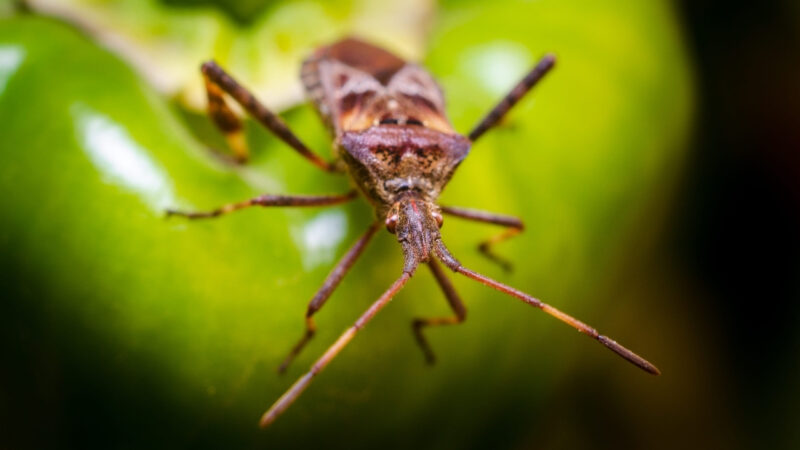
Stink bugs are broad, shield-shaped insects that get their name from the odor released when disturbed or crushed.
Several native species occur in Iowa, and homeowners may also encounter the invasive brown marmorated stink bug.
They feed by piercing plant tissue. Depending on the species, that can mean fruits, vegetables, ornamental plants or other insects.
Like boxelder bugs, some stink bugs gather around buildings as temperatures fall and can wander indoors looking for winter shelter.
12. Ants
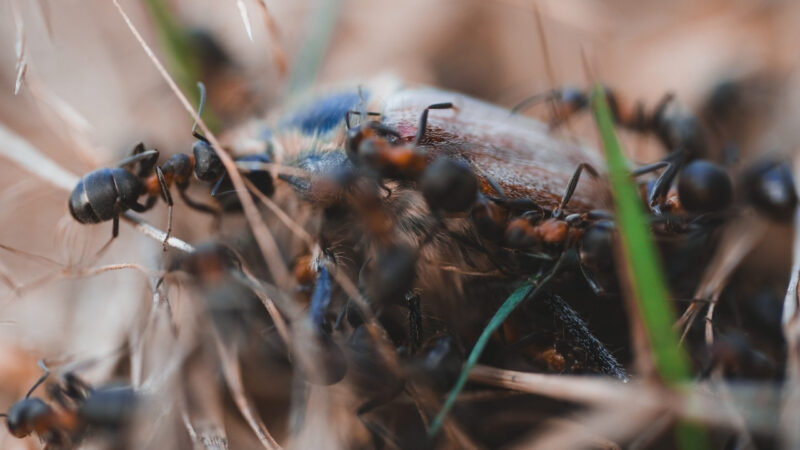
A trail of ants across a patio is rarely mysterious. Finding where they are coming from can be harder.
Iowa yards support many ant species. Most nest outdoors beneath soil, pavement, stones, logs, or landscape timbers. Workers enter homes because food or moisture is available, not because every ant colony is established inside the house.
Outdoor ants also perform useful jobs. They move soil, remove dead insects, and become food for other backyard wildlife.
The first step with an indoor ant problem is identifying the species and locating the route rather than repeatedly spraying the workers you can see.
13. Praying Mantises
View this post on Instagram
A praying mantis is one of the larger backyard insects an Iowan can stumble across, particularly in gardens and taller vegetation.
The long front legs are adapted for grabbing prey. Mantises eat flies, moths, grasshoppers, and other insects, but they are general predators rather than selective pest killers. A mantis can just as easily capture a bee or butterfly.
Egg cases sometimes remain attached to stems through winter and release dozens of tiny mantises after warm weather returns.
14. Grasshoppers
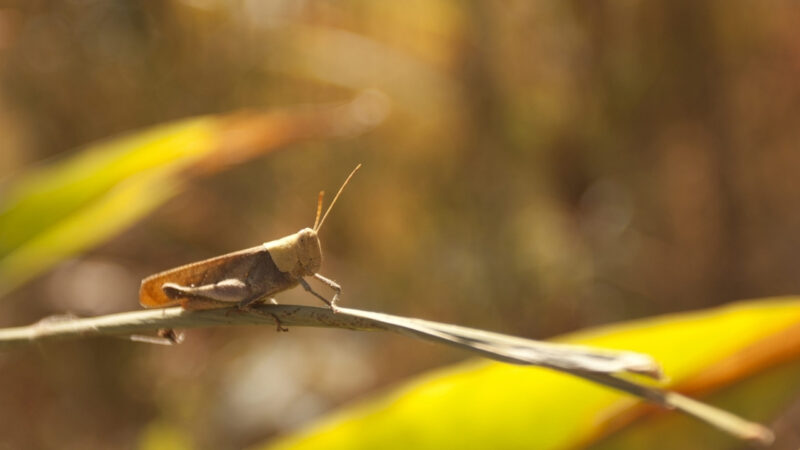
Grasshoppers become increasingly noticeable as summer progresses.
Most spend their time in lawns, field edges, gardens and taller vegetation. Numbers vary considerably from year to year, with hot and dry conditions favoring some species.
A few grasshoppers in a lawn are normal. Large populations can strip leaves and become serious pests in gardens and agricultural fields.
15. Earwigs
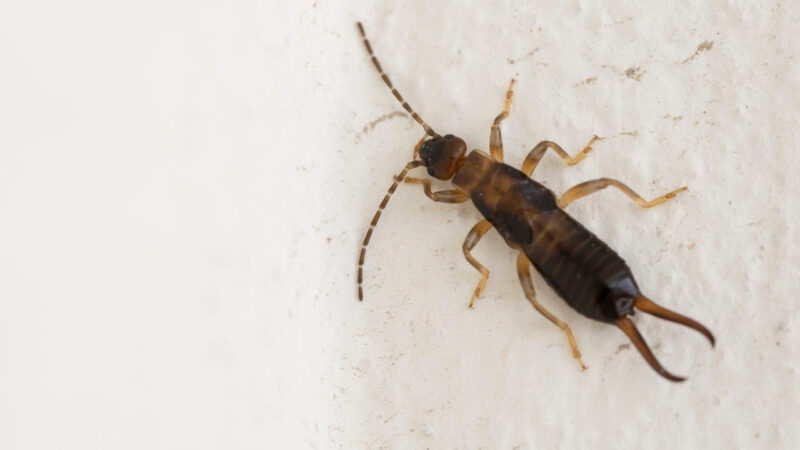
Earwigs look threatening because of the pincers at the end of the abdomen, but they are not dangerous household insects.
They prefer damp, protected places and are regularly found beneath mulch, flowerpots, boards and landscape materials.
Earwigs eat decaying organic material as well as living plants and small insects. They sometimes chew flowers and vegetable seedlings when populations are high.
Finding them around a house usually says more about moisture and shelter than it does about a major infestation.
Spiders and Ticks Are Common Too, but They Are Not Bugs
People use the word bug loosely, so spiders and ticks inevitably get included. Biologically, both belong to the arachnid group rather than the insects.
Ticks deserve special attention because several Iowa species can transmit disease. The blacklegged tick, American dog tick, and lone star tick are covered in our guide to common ticks in Iowa and the diseases they spread.
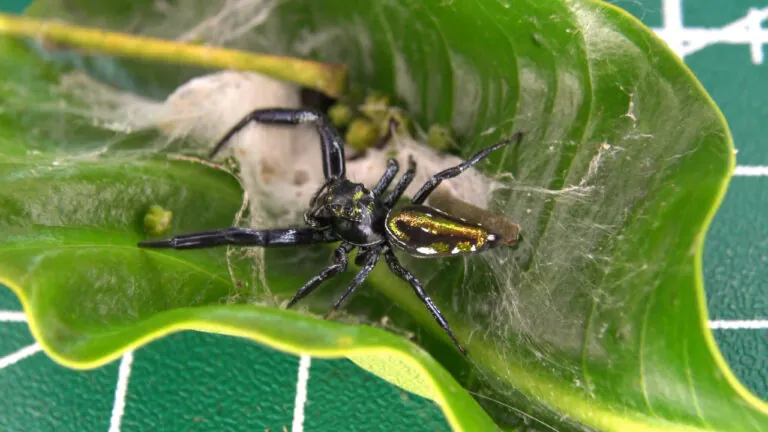
Most backyard spiders are predators that remove insects. Jumping spiders are particularly visible during the day because they hunt across walls, fences, and vegetation instead of waiting in large webs.
Not Every Bug Needs to Be Removed
The quickest way to make a backyard poorer in wildlife is to treat every insect as a pest.
Bees, butterflies, beetles, flies, and wasps all contribute to pollination in Iowa. The Iowa DNR notes that insects perform the overwhelming majority of pollination in the state, and somewhere between 70% and 87% of flowering plant species worldwide depend on pollinators.
A useful distinction is between an insect that is present and an insect that is actually causing a problem.
Bug
Main backyard role
When to act
Boxelder bug
Mostly harmless plant feeder
Seal the house before large numbers enter
Japanese beetle
Plant pest
When valuable plants are being heavily damaged
Firefly
Predator and familiar native wildlife
No control needed
Mosquito
Biting insect and possible disease vector
Remove standing water and reduce bites
Paper wasp
Predator and pollinator
When a nest creates a sting risk
Bumble bee
Major pollinator
Leave undisturbed unless a nest creates a safety issue
Lady beetle
Aphid predator
Mainly when large numbers enter the home
Ant
Decomposer, soil mover and predator
When colonies repeatedly invade indoor spaces
If You Cannot Identify What You Found
Iowa homeowners have a useful local option instead of guessing from a blurry internet photo.
The Iowa State University Plant and Insect Diagnostic Clinic identifies insects and provides information about their biology and management. Good photos showing the insect from several angles are usually much more useful than a description such as “small black bug in the kitchen.”
Before treating anything in the yard, identify it first. A shiny beetle eating a rose, a wasp carrying caterpillars back to a nest, and a bee working through a patch of coneflowers may all be living within a few feet of one another, but they are doing completely different jobs.
The Bugs You Notice Change With the Season
Spring brings emerging ants, bees, and early flies. Japanese beetles arrive during summer, mosquitoes build with warm weather and standing water, and cicadas become impossible to ignore once their calls begin.
By late summer and fall, yellowjackets become more visible around food and boxelder bugs begin gathering on warm walls before winter.
Once you know those seasonal patterns, an Iowa backyard becomes easier to read. A sudden crowd of red-and-black boxelder bugs in October is expected. Metallic beetles shredding a rose in June deserve attention. Bumble bees working through flowers are exactly where they should be.