
Beetles are everywhere in Iowa once you know where to look. Some spend the day chewing through rose leaves, others hide under logs until dark, and a few spend most of the year underground before suddenly appearing in large numbers.
The state has hundreds of beetle species, and most people encounter only a small fraction of them. Gardens, farm fields, wooded trails, porch lights, and even the siding of a house can all produce completely different types.
Several of the species below are pests. Others are useful predators or harmless scavengers. Location is often the fastest clue to figuring out which one you have found.
1. Japanese Beetles, Look Around Roses, Grapes and Fruit Trees
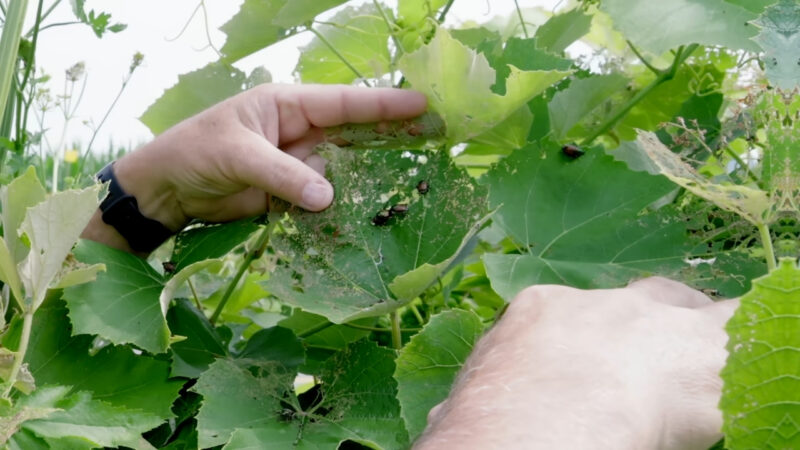
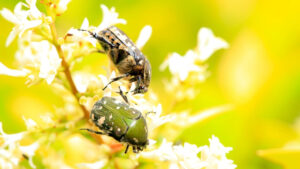
Japanese beetles are among the easiest ones to recognize. Adults have metallic green heads, bronze wing covers, and a row of small white hair tufts along the sides of the abdomen.
They are also among the most destructive insects found in Iowa gardens. Iowa State University Extension reports that adults feed on the leaves, flowers, and fruit of more than 300 plant species.
Roses are one of the most obvious places to find them, but grapes, raspberries, crabapples, lindens, birches and many other landscape plants can attract large groups.
Adults normally begin appearing from mid-June into July. Iowa first confirmed the species in 1994, and it has since spread through much of the state. Iowa State University reported Japanese beetles in 75 counties by 2021.
The damage is easy to recognize. They eat the soft tissue between leaf veins, leaving behind a thin skeleton of the original leaf.
They also turn up in agricultural fields. Corn silks and soybean leaves are both potential food sources, although severe field damage is less common than dramatic feeding on garden plants.
2. Ground Beetles, Check Under Logs, Rocks and Leaves
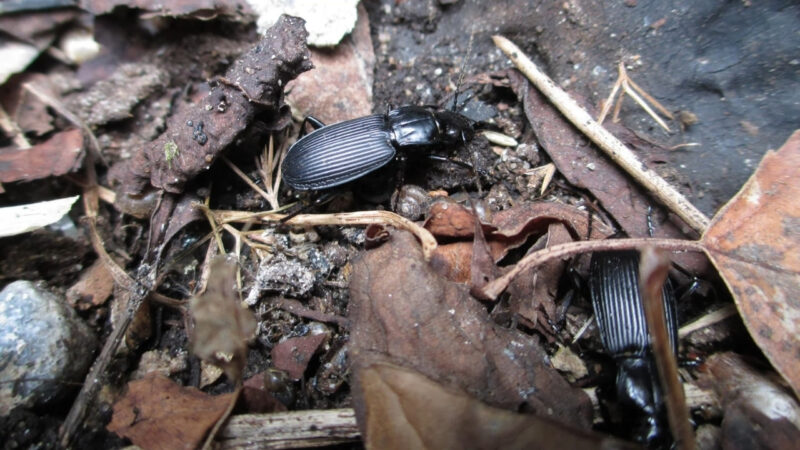
Ground beetles are among the most common in Iowa, but many people rarely notice them because most species are active at night.
Iowa State University says there are hundreds of ground beetle species in the state. Many are shiny black or dark brown with ridges running along the wing covers.
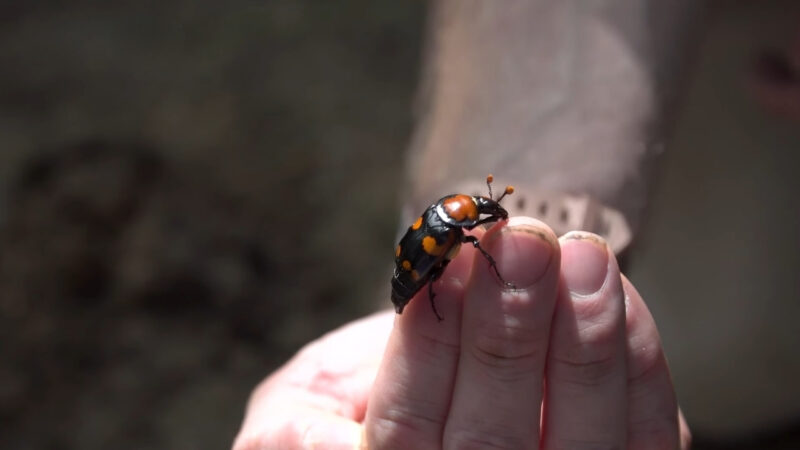
They are useful predators. These insects feed on larvae and other small animals living close to the soil. They occasionally wander indoors through open doors, windows, and foundation cracks. According to Iowa State University Extension, they do not damage houses, furniture, people or pets. A dark beetle running across a basement floor at night may therefore be an accidental visitor rather than a household infestation. June beetles are the clumsy brown insects that repeatedly crash into windows, screens, and porch lights during warm evenings. Iowa has several species commonly called May or June beetles. Adults are generally oval, heavy-bodied and brown to reddish brown. Their attraction to light makes them particularly easy to find. Check porch lights, garage doors and illuminated windows after dark from late spring through summer. The larvae live underground as white grubs and feed on plant roots. Depending on the species, the immature stage can last several years. Adults also feed on tree foliage, but they are generally less destructive than Japanese beetles. Lady beetles are predators rather than plant pests, and they spend much of the growing season hunting aphids and other small insects. The multicolored Asian lady beetle is particularly common throughout Iowa. Adults vary from yellow-orange to deep red, and the number of black spots varies dramatically between individuals. Their behavior changes in fall. Large numbers gather on sunny walls as temperatures drop and begin searching for places to spend winter. Iowa State University describes them as beneficial predators outdoors but significant household nuisances once they begin entering buildings. If dozens suddenly appear around windows in October, they have not started feeding on the house. They are looking for winter shelter. Blister beetles deserve more caution than most on this list. Iowa has at least four species, including black, ashgray, margined and striped blister. Adults have elongated, relatively soft bodies compared with the rounded shape of scarabs. They are especially likely to appear on plants in vegetable gardens and agricultural fields. Iowa State University specialists have recorded them feeding on beans, beets, peppers, potatoes, tomatoes, corn, peas, squash, soybeans, clover and alfalfa. Pigweed, horsenettle and black nightshade are also attractive to them. The name comes from cantharidin, a chemical in their bodies that can irritate skin and cause blistering. The same chemical creates a serious risk for horses when blister beetles are accidentally crushed into alfalfa hay. A cluster of long, narrow beetles feeding together on garden plants should therefore be identified before handling them. Click beetles are narrow, elongated insects that have one of the easiest behaviors to recognize. Place one upside down and it can snap a specialized joint in its body, launching itself into the air with an audible click. The maneuver helps the beetle flip back onto its feet and escape predators. Adults regularly appear around outdoor lights and vegetation during warm months. The larvae are called wireworms. They live in soil and can feed on seeds and underground parts of crops, making some species agricultural pests. Homeowners are much more likely to encounter the harmless adult at a porch light than to notice the larvae underground. Goldenrod, milkweed and other flowering plants can attract large numbers of soldier beetles late in the season. Adults have elongated bodies and softer wing covers than many familiar insects of the same species. Several species have yellow, orange or reddish markings. They feed on pollen, nectar and small insects. Their larvae are also predators. A garden full of these therefore does not need treatment. They are using flowers as feeding and hunting sites. Late-summer flower patches that attract them also attract many of the species covered in our guide to Iowa butterflies you are most likely to spot this season. Sabertooth longhorn beetles are one of the longest beetles in the world. Including the serrated jaws of males (like this one), they can reach 7 in (17.8 cm) long! Living in humid rain forests in the Amazon River basin from Brazil west to Peru & Ecuador, these beetles are at risk. pic.twitter.com/8sXloBB7Vu — American Museum of Natural History (@AMNH) June 3, 2022 Longhorn beetles are named for antennae that can equal or exceed the length of the body. Adults vary enormously in size and color, but the antennae make many species immediately recognizable. The larvae usually develop inside wood. Fallen trees, dead branches, logs and firewood are therefore good places to encounter adults. They play an important role in breaking down dead wood. Others develop in living trees and can become pests. Finding a single longhorn beetle on stacked firewood is normal. Repeated emergence from structural lumber or a living tree deserves closer identification. Carrion beetles are not the species most people deliberately search for, but they perform one of the less glamorous jobs in Iowa ecosystems. Many members of the family Silphidae feed on dead animals or on fly larvae and other organisms attracted to carrion. Some bury small carcasses underground and use them as food for developing larvae. Roadkill, dead rodents and other small animal remains can therefore attract several species. Their work helps recycle nutrients and speeds decomposition that would happen much more slowly without scavenging insects. These ones are easy to mistake for something else because their wing covers are unusually short, leaving much of the abdomen exposed. They live in moist environments and around decomposing organic matter. Many are predators of smaller insects and larvae. Their narrow bodies let them move through soil, litter and tight spaces where larger beetles cannot hunt easily. Tiger beetles are among the fastest and most visually striking. They prefer open areas where bare ground is exposed to sunlight. Sandy trails, river edges, disturbed soil and dry paths are good places to search. Adults run quickly across the ground, stop suddenly and then sprint again after prey. Many species also fly a short distance when approached before landing farther ahead on the trail. Some have metallic green or bronze coloring that becomes much more obvious in direct sunlight. People hiking through Iowa parks can encounter them without realizing what they are. Our guide to backpacking in Iowa covers several environments where slowing down along sunny trails can reveal insects that disappear when you walk quickly past them. Burying beetles belong to the same general carrion-feeding group but are especially interesting because of their parental behavior. A male and female can locate a small dead animal, bury it and prepare the carcass as food for their larvae. Iowa also has conservation significance for this group because the American burying beetle, one of the largest carrion beetles in North America, historically occurred across a much broader portion of the central United States. Most people will encounter smaller and more common burying beetles rather than the rare species. Among the species on this list, Japanese beetles are the ones Iowa gardeners are most likely to watch closely during summer. The species has one generation per year in Iowa. Adults lay eggs in moist turf during July, and the larvae remain underground as white grubs. They feed on roots before overwintering and returning toward the surface when soil warms in spring. That means the same insect can create two different problems during its life cycle. Adults damage leaves and flowers, and larvae can damage turfgrass roots. Japanese beetle numbers also vary sharply from one neighborhood to another and from year to year. A yard covered with them one summer does not guarantee the same level of activity the next. Iowa State University operates a useful identification service for residents who find unfamiliar insects. The Plant and Insect Diagnostic Clinic can identify submitted insects and provide information about their biology and whether management is necessary. Clear photographs should show the beetle from above and from the side, with something nearby for scale. Color alone is rarely enough because closely related species can look nearly identical. Iowa offers plenty of places to find interesting insects, from flower beds and wooded trails to porch lights and garden soil. A few minutes of careful looking is usually enough to notice how different species use completely different parts of the same yard or park.
3. June Beetles, Look Around Porch Lights on Warm Nights
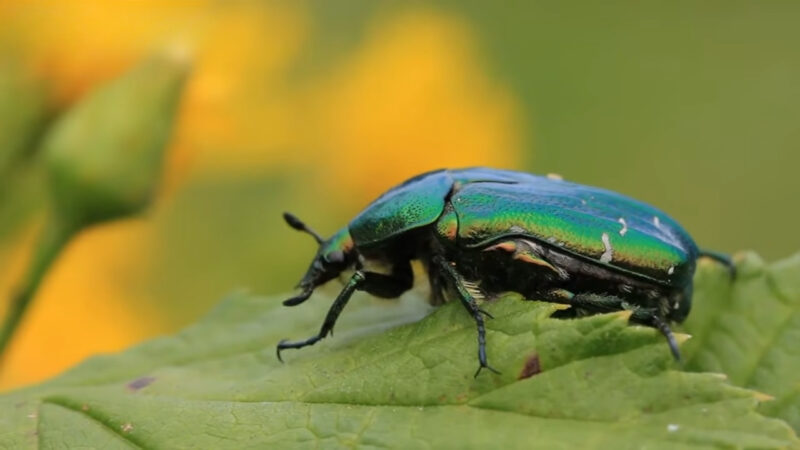
4. Multicolored Asian Lady Beetles, Look on Plants in Summer and Buildings in Fall
5. Blister Beetles, Look in Vegetable Gardens and Alfalfa
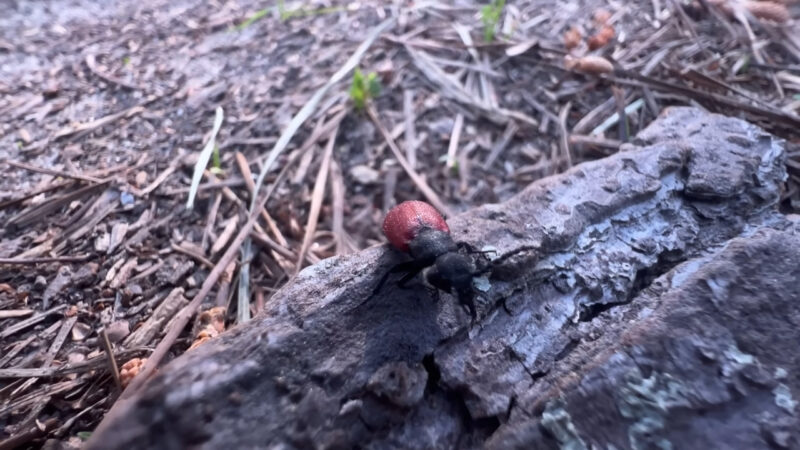
6. Click Beetles, Look Around Lights and Gardens
7. Soldier Beetles, Look on Late-Summer Flowers
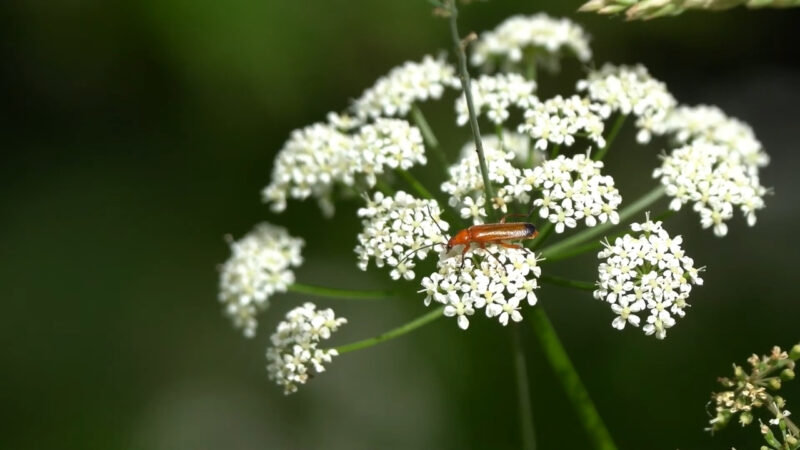
8. Longhorn Beetles, Look Around Trees and Firewood
9. Carrion Beetles, Look Near Dead Animals
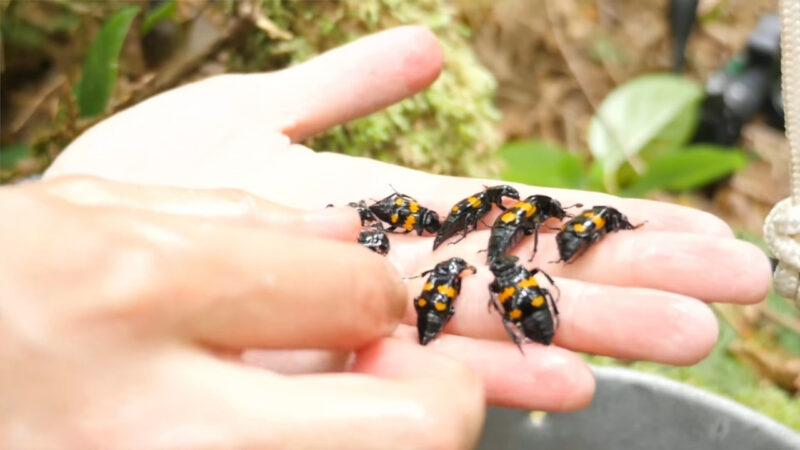
10. Rove Beetles, Look in Damp Soil and Decaying Material
11. Tiger Beetles, Look for Them on Bare Ground
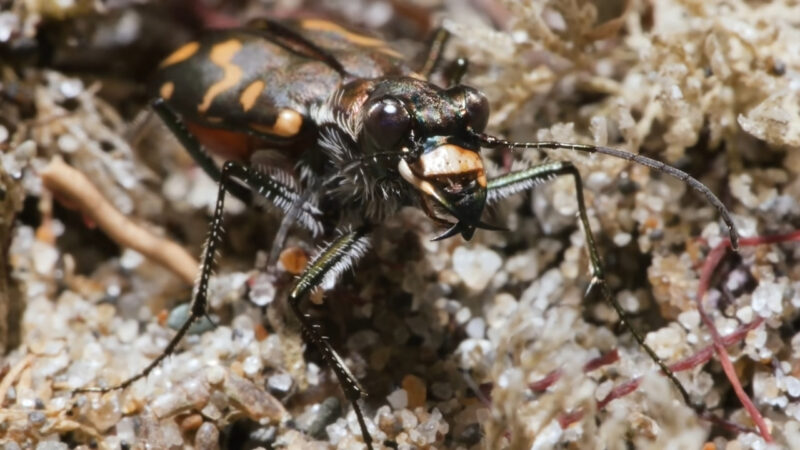
12. Burying Beetles, Search Carefully Around Carrion
Where Beetles Are Easiest to Find in Iowa
Place to look
Beetles you may find
Roses and flowering shrubs
Japanese beetles, soldier beetles, lady beetles
Under logs and stones
Ground beetles, rove beetles
Porch lights at night
June beetles, click beetles, ground beetles
Vegetable gardens
Japanese beetles, blister beetles, lady beetles
Tree trunks and firewood
Longhorn beetles
Bare sunny trails
Tiger beetles
Flowers in late summer
Soldier beetles, Japanese beetles, lady beetles
Dead animals and carrion
Carrion beetles, burying beetles
Japanese Beetles Deserve the Most Attention
If You Find a Beetle You Cannot Identify
Conclusion