

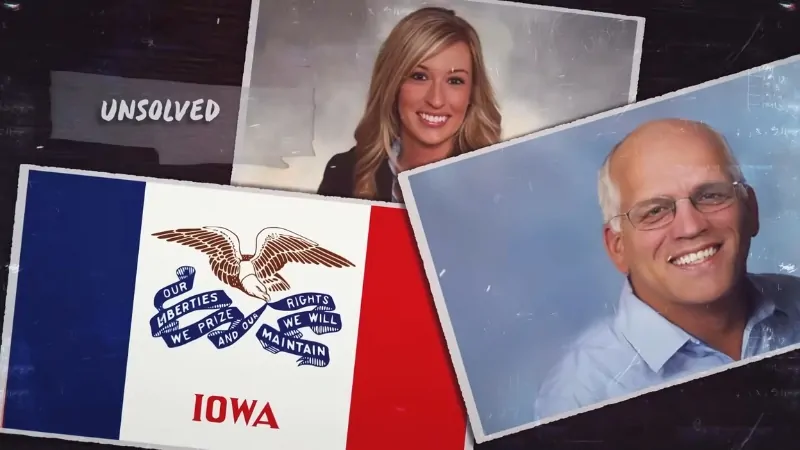
Iowa rarely makes national crime headlines. Life moves at a steadier pace here. Cornfields roll on, towns know their neighbors, and most days pass without sirens.
Yet a quieter record sits inside filing cabinets, evidence rooms, and family scrapbooks across the state. Unsolved cases remain open in spirit, even when years pass without an arrest. For many families, time never closed anything.
Cold cases in Iowa stretch across missing adults, vanished children, confirmed homicides, and unidentified remains. Each category carries a different burden for investigators. Some files lack proof of a crime.
Others hold clear evidence of violence but no viable suspect. A few cases cannot even begin the “who” part of the story because the person has no confirmed identity.
Iowa’s Missing Person Information Clearinghouse exists to keep all of that information coordinated through the Department of Public Safety and the Division of Criminal Investigation. Every tip still matters. Every document still counts.
Here’s a look at several of the most haunting unsolved Iowa cases, what public records confirm, where each investigation stands, and why answers remain out of reach.
Why Cold Cases Remain Open For Decades
Cold cases do not stay unresolved because agencies stop caring. They remain open because workable leads dry up.
Clearance Rates And The Math Behind Unsolved Violence
The FBI said murders and non-negligent manslaughter fell nearly 15%, reaching their lowest level in nine years. pic.twitter.com/oW8pQfygD9
— Ground News (@Ground_app) August 8, 2025
National homicide clearance remains far from complete. Pew Research summarized FBI data showing that police cleared about 52.3% of murders and nonnegligent manslaughters in 2022.
That means nearly half of homicide cases nationwide do not reach a formal resolution in a given year. For a lower population state, even a modest number of unresolved files each year builds a long trail over time.
The Time Factor
Several practical problems compound as years pass:
What Modern Tools Changed
According to reports, Iowa’s Division of Criminal Investigation maintains DNA profiles and runs them through CODIS. Lab staff emphasize accuracy, traceability, and strict controls.
Iowa also rebuilt its state crime database, migrating 2016 to 2020 data into a new system. Officials caution that historical results from that period require careful interpretation due to technical specification changes and certification processes.
None of that solves a case alone. Yet modern databases, better lab controls, and broader data sharing make it easier to revisit older evidence with stronger tools.
Case 1: Jodi Huisentruit
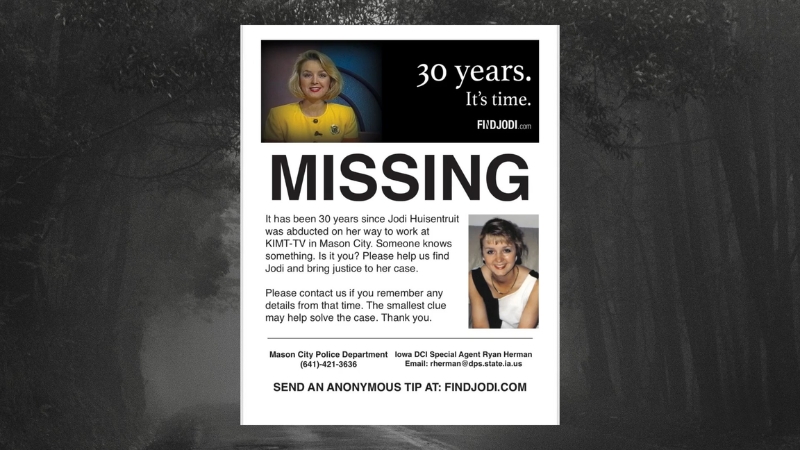
Mason City, 1995
Few Iowa cases linger in public memory as deeply as the disappearance of Jodi Sue Huisentruit.
What Public Records Confirm
The Iowa Missing Person Information Clearinghouse lists her last known contact date as 06/27/1995. Her listed physical descriptors include a height of 5’4″, a weight of 110 lbs at the time of entry, blonde hair, and brown eyes.
Recent Court Developments
In 2025, KTTC reported a legal dispute connected to a 2017 search warrant tied to the investigation. Court filings focus on whether that warrant should be unsealed.
Reporting notes that GPS data was sought from vehicles linked to a person believed to be the last to see her alive. The same reporting confirms that John Vansice died in December 2024.
The legal fight also centers on whether releasing warrant details could affect an active investigation.
Why The Case Remains Hard To Close
The known timeline remains narrow. Much of the physical evidence remains sealed. Investigators maintain tight control over details to protect any future prosecution path.
Case 2: Johnny Gosch
West Des Moines, 1982
Johnny Gosch vanished while delivering newspapers. His name still appears on missing child lists nationwide.
National Case Status
The National Center for Missing and Exploited Children continues to feature his case. Time markers update regularly, and the case remains unresolved.
Why His Case Still Weighs On Iowa
Routine childhood patterns make his disappearance feel personal across generations. Over the decades, the file attracted rumors and misdirection that complicate the flow of reliable tips.
Case 3: The Evansdale Cousins
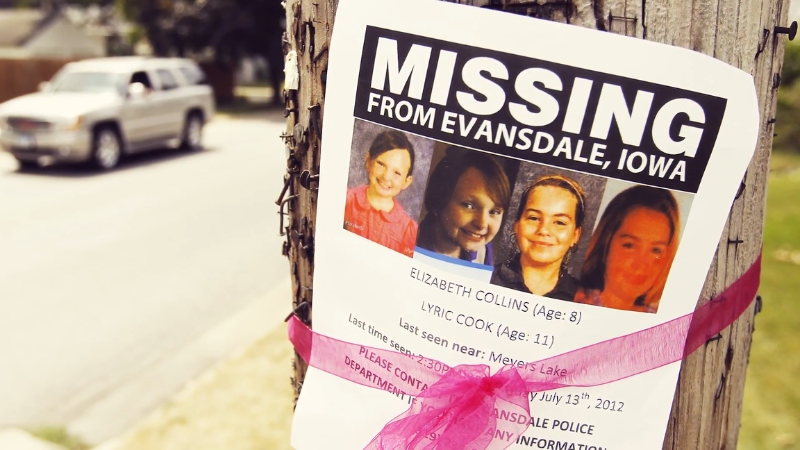
Evansdale, 2012
Lyric Cook and Elizabeth Collins disappeared in July 2012. Their case remains one of the most devastating Iowa investigations in modern history. Nearly fourteen years later, the case is still cold.
Federal Posture
The FBI maintains dedicated pages for both girls. Those listings confirm that the investigation remains open and that tips remain relevant.
Why Closure Remains Difficult
Child abduction cases rely heavily on rapid suspect identification, strong forensic placement, or a witness who can place a person with the victims at the critical moment.
Without one of those pieces, resolution becomes extremely difficult even with national attention.
Case 4: The Amana Holiday Inn Murders
View this post on Instagram
Amana, 1980
Two people were killed at a Holiday Inn in Amana on 02/05/1980.
Federal And State Documentation
An FBI ViCAP bulletin identifies the victims as Rose Burkert and Roger Atkison. Iowa DCI remains listed as the investigating agency.
Local reporting decades later describes continued evidence discussions, including DNA-related references involving a towel. The case remains open.
Why The Case Remains Open
Hotels naturally bring a wide pool of potential suspects, including travelers, staff, and pass-through visitors. Evidence collected in the early 1980s also limits how much modern forensic testing can extract.
Case 5: Denise Fraley
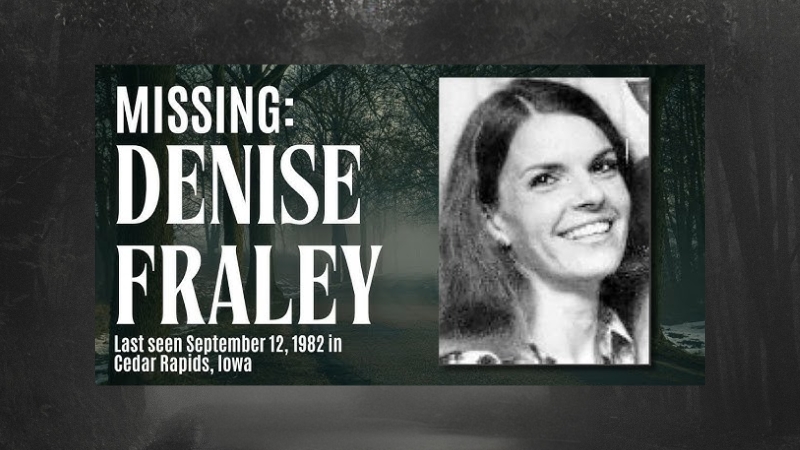
Cedar Rapids, 1982
Denise Fraley disappeared in July 1982 at age 24.
What Public Reporting Shows
The FBI reporting states that she spent an evening out with her husband and that they both separated at a lounge. She did not return home afterward. Her case remains listed as an unresolved disappearance.
Why Missing Adult Cases Stall
Without early proof of violence, missing adult investigations can lose momentum. Over time, the line between disappearance and homicide becomes harder to establish in court.
Case 6: Corinne Perry
@cardinalcrimes What happened to Corinne Perry? #corinneperry #coldcase #iowacoldcase #crime #truecrime #crimetok #truecrimetok #truecrimecommunity #greenscreen #truecrimecommunity #crimestories #iowa #ia ♬ original sound – Becca
Creston, 1983
Corinne Perry left for a routine laundromat trip in April 1983.
Known Timeline
Reporting confirms she was 17 at the time. Her car was later found with folded clothes inside. She was later found deceased. Iowa DCI reopened her case in 2009.
Why The Case Still Hurts Locally
Small communities often carry quiet suspicions for decades. Without physical evidence, a confession, or a court-ready witness statement, legal closure remains out of reach.
Case 7: Iowa’s Unidentified Remains
Statewide, 1975 to 1988 Entries
Not every investigation begins with a name.
What The State Confirms
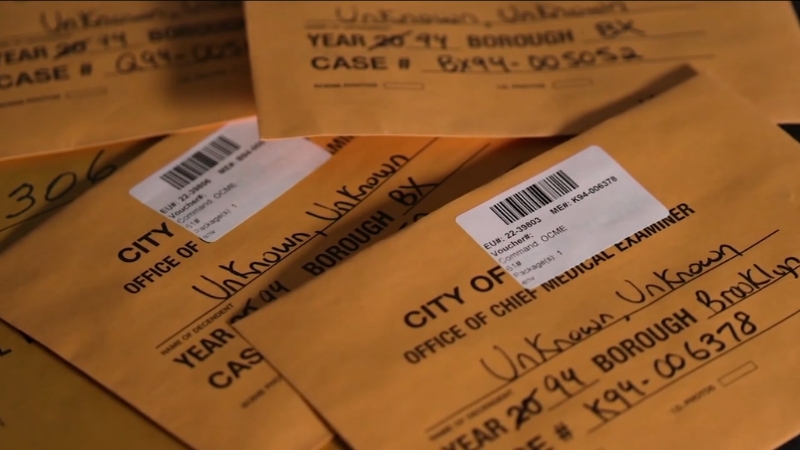
The Iowa Department of Public Safety states that six unidentified bodies remain on file, entered into NCIC in an effort to locate matching missing person reports. Officials caution that if a person was never reported missing, automated matching may never occur.
Why Identity Matters
Unidentified remains block the entire investigative chain. Without a confirmed identity, investigators cannot reliably reconstruct movement patterns, relationships, employment history, or potential motives tied to personal relationships.
How Iowa Agencies Structure Cold Case Work
Iowa’s cold case work relies on coordinated systems, specialized units, and lab support that keep long-running investigations active even decades later.
Iowa Missing Person Information Clearinghouse
Established on July 1, 1985, the Clearinghouse compiles, coordinates, and distributes information on missing persons and unidentified remains. It operates within the Department of Public Safety and is housed in Iowa DCI.
State Crime Lab Capacity
Iowa DCI’s Ankeny lab stores about 8,000 individual DNA samples. Lab operations stress zero-error tolerance and CODIS integration.
Attorney General Cold Case Unit
The Iowa Attorney General’s office maintains a Cold Case Unit that supports unresolved homicide investigations at the local level.
Quick Reference Table
| Case | Year | Area | Category | Status |
| Jodi Huisentruit | 1995 | Mason City | Missing person | Still missing, 2017 warrant dispute reported in 2025 |
| Johnny Gosch | 1982 | West Des Moines | Missing child | Still missing, active NCMEC listing |
| Evansdale Cousins | 2012 | Evansdale | Missing children, homicide | FBI still seeking tips |
| Amana Holiday Inn Murders | 1980 | Amana | Double homicide | FBI ViCAP bulletin, unsolved |
| Denise Fraley | 1982 | Cedar Rapids | Missing person | Unresolved disappearance |
| Corinne Perry | 1983 | Creston | Homicide | Reopened in 2009, unsolved |
| Unidentified Remains | 1975 to 1988 | Statewide | Unidentified | Six cases listed by the Iowa DPS |
What Helps Cold Cases Move Forward
Cold cases tend to change direction for several repeatable reasons.
New Names Enter Databases
NCIC, CODIS, NamUs, and Clearinghouse records create automated match opportunities across jurisdictions. Iowa DPS confirms that missing entries drive many of those matches.
Old Evidence Gains New Testing Options
Lab staff describe improved DNA amplification, tracking, and storage controls that support re-testing of older items under modern standards.
Witnesses Reconsider Silence
Time changes relationships, fear levels, and personal circumstances. One credible statement can reorganize an entire investigation.
Public Data Supports Better Analysis
Iowa’s rebuilt crime reporting framework supports incident-based tracking and transparent explanations of historical data limitations. That clarity improves long-term investigative planning.
Closing Thoughts
Cold cases do not fade for the families who live with them. They remain present in everyday routines, birthdays, empty chairs, and unanswered questions.
Iowa continues to refine its databases, lab processes, and statewide coordination. Progress arrives quietly, often without headlines.
Answers still exist. The right tip, the right DNA profile, or the right witness voice can reopen any file at any time.