
Iowa still looks affordable by national standards in 2026, but affordability is no longer something buyers can assume without checking county-level numbers.
Statewide, Zillow put Iowa’s median sale price at $220,500 in January 2026, with a median list price of $239,767 in February, while Freddie Mac’s average 30-year fixed mortgage rate stood at 6.00% on March 5, 2026.
Iowa’s statewide median household income was $75,059 in the 2020-2024 ACS, which helps explain why the state remains relatively accessible compared with much of the country, even after several years of rising home values.
Common Sense Institute Iowa found that Iowa remained one of the more affordable housing markets in the country, ranking 7th most affordable when looking only at mortgage cost, 11th when property taxes were included, and 9th relative to resident earnings. Even so, statewide prices have kept moving upward.
The FHFA’s all-transactions house price index for Iowa reached 460.03 in Q4 2025, up from 442.25 a year earlier. Iowa REALTORS® also reported a statewide median sales price of $231,500 in January 2026, up 7.7% from January 2025.
So yes, Iowa can still be affordable, but mainly if buyers stay flexible about location, commute, housing condition, and local job access. County-level pricing tells that story better than statewide averages do.
How I Measured “Cheapest”
For county comparisons, I used Zillow’s county housing market pages and ranked counties by typical home value, updated on January 31, 2026.
Zillow’s Home Value Index is designed to capture the typical value of homes in a given geography and is available across counties, which makes it more useful for a statewide county ranking than trying to compare spotty closed-sale data from very small markets.
A quick note on why that matters: some rural counties simply do not generate enough recent sales to make month-to-month median sale prices stable.
A county with only a handful of closings can look artificially cheap or oddly expensive in any single month. A typical-value measure smooths out some of that noise.
Iowa’s Cheapest Counties To Buy a House in 2026
Here are the 10 cheapest Iowa counties by Zillow typical home value among county pages I reviewed for January 31, 2026. All figures below are county-level typical home values.
| Rank | County | Typical Home Value | 1-Year Change |
| 1 | Appanoose County | $110,300 | -3.9% |
| 2 | Lee County | $116,847 | -1.5% |
| 3 | Wapello County | $123,555 | +0.2% |
| 4 | Taylor County | $128,940 | +2.1% |
| 5 | Webster County | $133,728 | +2.2% |
| 6 | Wayne County | $135,172 | +4.1% |
| 7 | Keokuk County | $137,469 | +2.2% |
| 8 | Des Moines County | $141,296 | +2.1% |
| 9 | Page County | $146,077 | +4.9% |
| 10 | Decatur County | $151,837 | +1.6% |
Put another way, every county on that list sits well below Iowa’s statewide median sale price of $220,500. Appanoose County, at $110,300, comes in at about half of that statewide median. Even No. 10, Decatur County, still lands far below Iowa’s broader market midpoint.
What Makes Each County Cheap, And What Buyers Should Keep In Mind
Before looking at the counties one by one, it helps to see why low prices show up in different parts of Iowa, and what tradeoffs buyers should weigh beyond the sticker price.
1. Appanoose County
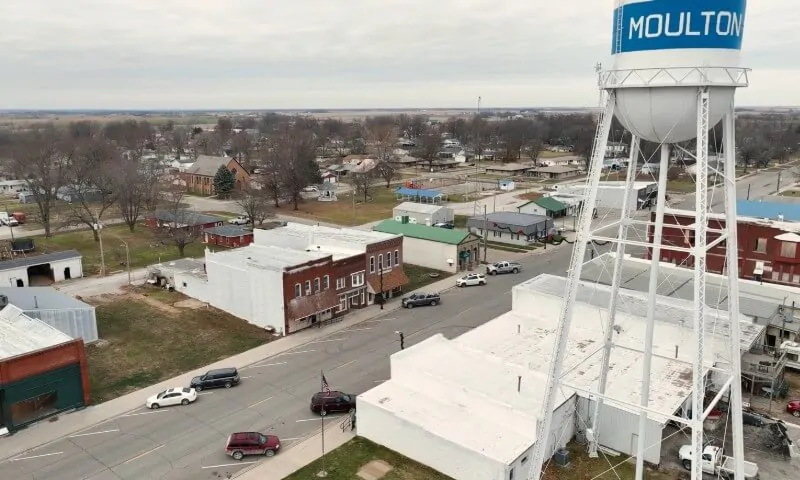
Appanoose County is the cheapest county in Iowa on Zillow’s January 2026 figures, with a typical home value of $110,300, and prices were down 3.9% from a year earlier. For buyers, that drop matters.
It suggests a market where headline affordability is strong, but resale momentum has been softer than in other parts of the state. Centerville anchors the county, and buyers often look there for older single-family homes at prices that would be hard to find in larger Iowa metros.
Cheap pricing does not automatically mean low carrying cost or easy financing. Appanoose County’s median household income was $54,934 in the Census Bureau’s 2020-2024 QuickFacts, well below the statewide median of $75,059. A buyer earning local wages may still need to budget carefully once insurance, repairs, utilities, and property taxes are added.
2. Lee County
Lee County came in second at $116,847, down 1.5% year over year. Located along the Mississippi River, with Keokuk and Fort Madison as major population centers, Lee County often appeals to buyers who want lower prices without moving into a tiny, highly isolated market.
River counties can offer more housing stock and more neighborhood variety than buyers expect at first glance.
A softer year-over-year trend may also mean sellers have less pricing power than in hotter parts of Iowa. That can help first-time buyers or cash buyers looking for leverage, but buyers should still inspect condition closely.
In older river-city markets, affordability often comes with older roofs, outdated electrical systems, or deferred maintenance.
3. Wapello County
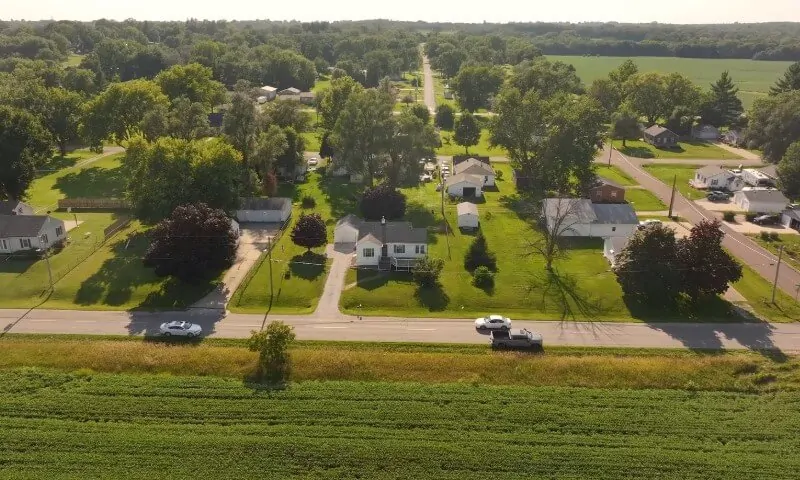
Wapello County, home to Ottumwa, posted a typical home value of $123,555, up only 0.2% over the year. Slow growth can be good news for buyers who care more about entry price than fast appreciation.
Compared with statewide pricing, Wapello sits in a zone where a buyer can still find a path to ownership without chasing the bidding pressure common in larger labor markets.
Ottumwa also gives Wapello a different profile than some cheaper counties farther south. Buyers often get access to more services, more employers, and more retail infrastructure than they would in a very small county, while still staying far under Iowa’s statewide median sale price. That balance is part of why Wapello tends to stay on affordability shortlists.
4. Taylor County
Taylor County landed at $128,940, with home values up 2.1% over the year. That number still places it deep in affordable territory, but the market is small and rural enough that buyers need patience.
Low inventory can matter as much as low prices in a county like Taylor. When only a limited number of homes are on the market, the “cheap county” label does not always translate into lots of good options on any given weekend.
For budget buyers, Taylor can still be attractive because the county stays far below both Zillow’s statewide median sale price and Iowa REALTORS®’ January statewide median.
Still, a house that looks inexpensive on paper can become much less affordable if it needs major foundation work, septic replacement, or a full interior update.
5. Webster County
Webster County, anchored by Fort Dodge, came in at $133,728, up 2.2% from a year earlier. Fort Dodge gives Webster a larger employment and service base than several counties ranked above it, which is one reason many buyers find Webster easier to picture as a primary-home market rather than purely a bargain hunt.
For a buyer comparing cheap counties, Webster offers an interesting middle ground. Prices remain low relative to Iowa overall, but the county has enough scale to reduce some of the tradeoffs tied to smaller markets.
Zillow also showed homes going pending in around 56 days, which points to a market that is moving, though not frantically.
6. Wayne County
Wayne County’s typical home value was $135,172, up 4.1% year over year. Among counties near the bottom of the price ladder, Wayne stands out for stronger recent appreciation than several peers.
A buyer looking for a low entry point with at least some evidence of price momentum may see that as encouraging.
At the same time, Wayne is a good reminder that affordability and liquidity are different things. Small-county markets can take longer to search, finance, and eventually sell.
Buyers planning only a short stay should think carefully about exit options before assuming a cheap purchase price solves every problem.
7. Keokuk County
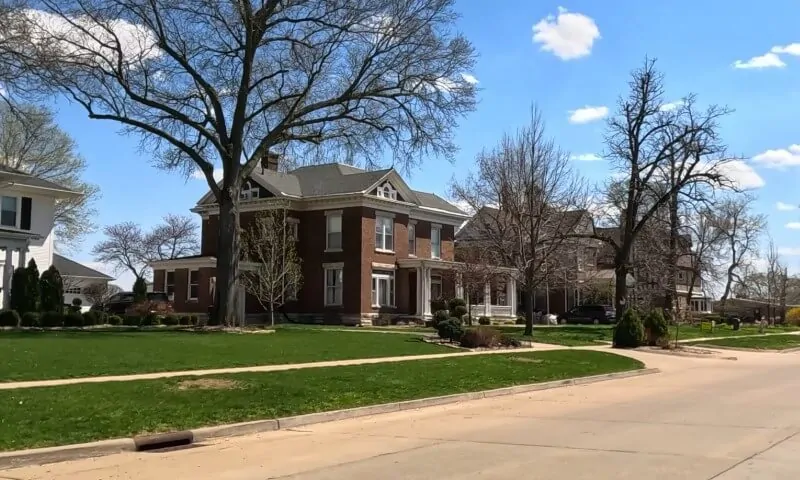
Keokuk County reached $137,469, up 2.2% over the year. Like several counties in southeast or south-central Iowa, Keokuk remains far cheaper than the statewide benchmark but sits high enough above the very bottom tier to suggest buyers may get a slightly broader range of homes and conditions.
One useful sign from Zillow’s county page is the median list price of $163,983 in February 2026. That gap between list price and typical value does not mean homes are overpriced, but it does suggest buyers should avoid assuming every active listing in a cheap county will automatically look like a bargain.
8. Des Moines County
Des Moines County came in at $141,296, up 2.1% year over year. Burlington helps give the county more urban structure than some counties higher on the cheap list, and that can matter for buyers who need access to schools, healthcare, and local employers without stretching into pricier Iowa markets.
Zillow showed homes going pending in around 63 days, which points to a market that is affordable but not frozen.
Buyers may have room to negotiate, especially on older homes or listings that have lingered, but seller expectations do not appear to have collapsed. In plain terms, cheap does not always mean distressed.
9. Page County
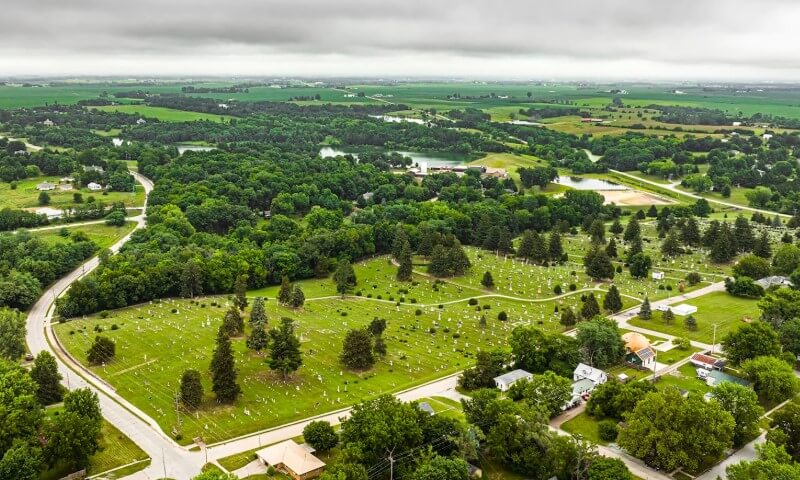
Page County posted a typical home value of $146,077 and one of the stronger annual gains in the group at +4.9%.
Clarinda and Shenandoah help give the county a more established small-town housing stock, and rising values suggest affordability has not gone unnoticed. Even with that gain, Page remains well below the Iowa median.
For buyers, Page shows how affordability can narrow even in traditionally low-cost places. A county can still be cheap in statewide terms while also becoming less forgiving for anyone waiting too long to buy.
A $146,077 market is still affordable by many standards, but it is no longer in the ultra-cheap bracket occupied by Appanoose or Lee.
10. Decatur County
Decatur County rounds out the list at $151,837, up 1.6% over the year. That still leaves the county nearly $69,000 below Iowa’s January statewide median sale price.
Located along the Missouri border, Decatur often draws buyers looking for rural space, modest purchase prices, and less competition than in central or eastern Iowa.
Crossing above $150,000 also marks a useful threshold. Once buyers move beyond the very cheapest Iowa counties, the market often starts to offer more homes in financeable condition, fewer deeply distressed properties, and a slightly wider range of neighborhoods. For many buyers, that can be worth paying a bit more upfront.
Why Iowa Still Looks Affordable, But Less Effortlessly Than Before
A few broad numbers explain the picture. Iowa’s statewide median sale price of $220,500 is still low relative to much of the country, and the state median household income of $75,059 remains high enough to keep ownership within reach for a large share of local households, at least more than in many coastal or Sun Belt markets.
Iowa also retained a strong affordability standing in the Common Sense Institute comparison.
But the market is clearly not standing still. Iowa REALTORS® reported a 7.7% year-over-year increase in statewide median sales price in January 2026, and the FHFA index also showed annual appreciation through Q4 2025.
On top of that, Freddie Mac’s 30-year fixed rate at 6.00% means monthly payments still feel meaningfully heavier than they did before rates surged in 2022 and 2023.
So the most honest answer is that Iowa is still affordable in relative terms, but buyers now have to be more selective.
Price gaps between counties matter more. House condition matters more. Financing terms matter more. A buyer who could once shop broadly across the state may now need to focus on lower-cost counties or settle for a smaller, older, or more rural home.
Cheap Houses Still Come With Real Tradeoffs
View this post on Instagram
A low purchase price can make a county look appealing at first, but long-term affordability depends on far more than the number on the listing.
Property Taxes Still Matter
Iowa’s effective property tax rate on owner-occupied housing was 1.23% according to Tax Foundation’s 2025 state profile.
Iowa’s Department of Revenue also notes that property taxes are shaped by assessed value, classification, and the taxable value inside local levying boundaries, so two homes with similar purchase prices can still lead to different tax bills depending on location.
For buyers chasing a low sticker price, that matters. A cheap house with a higher tax burden, major repair needs, or high utility costs can be less affordable over time than a modestly pricier house in better shape.
Mortgage Rates Still Reshape the Math
Freddie Mac reported an average 30-year fixed mortgage rate of 6.00% as of March 5, 2026, down from 6.63% a year earlier, but still elevated enough to shape buying power.
Lower-priced counties help offset that pressure, which is part of why markets under roughly $150,000 stand out so much in 2026.
A buyer financing $115,000 or $130,000 simply faces a different payment conversation than a buyer financing $240,000 or $300,000. County choice in Iowa can still change the budget more dramatically than small movements in mortgage rates.
Local Wages And Housing Condition Are Just As Important As Price
Affordable counties often overlap with places where household incomes are lower and the housing stock is older. Appanoose County is a clear example, with a median household income of $54,934 versus Iowa’s statewide $75,059. Numbers like that help explain why a market can look inexpensive to an outsider while still feeling expensive to local residents.
Older homes can also bring hidden expenses. Roof age, plumbing, foundation stability, insulation, and HVAC condition may matter more in a $120,000 county than granite counters or fresh paint ever will.
Which Kind Of Buyer Fits Iowa’s Cheapest Counties Best?
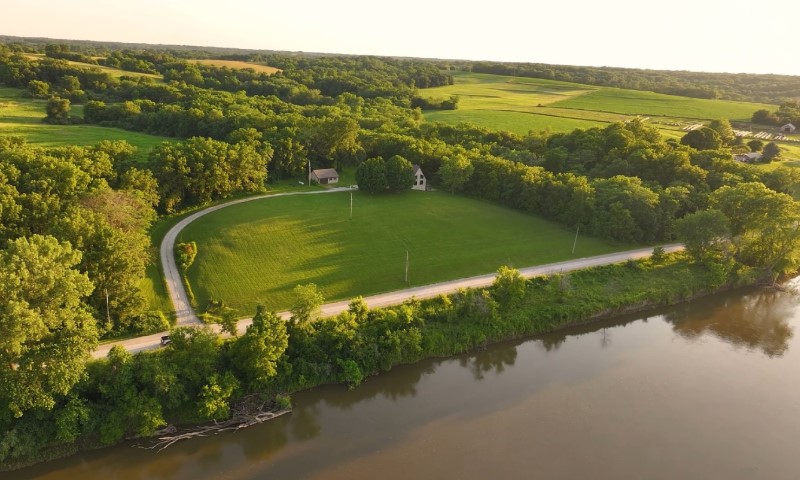
The cheapest counties in Iowa tend to work best for a few types of buyers:
- Buyers with flexible geography, especially remote workers or retirees
- First-time buyers prioritizing low entry price over fast resale
- Investors hunting for lower acquisition costs, while accepting slower appreciation or thinner liquidity
- Buyers comfortable with older housing stock and repair projects
By contrast, buyers who need a deep job market, frequent airport access, top-tier health systems nearby, or very fast resale liquidity may find low-cost counties less practical, even when the purchase price looks excellent.
FAQs
Is Iowa Still Affordable In 2026?
Yes, Iowa is still affordable, especially compared with many other states. Statewide pricing remains moderate, and a long list of counties still sits far below the state median.
A buyer who is open to southern, southeastern, or rural Iowa can still find home values close to $110,000 to $150,000 in 2026.
But “affordable” in 2026 has more conditions attached than it did a few years ago. Rates are higher than buyers grew used to in the late 2010s and early 2020s. Statewide prices have risen. Property taxes still matter.
And the cheapest counties often come with tradeoffs in jobs, inventory, and house condition. Buyers who go in with open eyes can still find very good value in Iowa. Buyers who rely only on a low asking price may end up surprised.